

What if the best way to wrap a difficult pallet is not to move it at all? With a rotating arm stretch wrapper, the arm travels around a stationary load. This can make the arrangement worth considering for heavy, light or unstable pallets that could shift on a turntable. It is not the right fit for every operation, though. Output requirements, floor space and how the machine connects with the rest of the line all matter.
If you’re comparing semi-automatic and automatic operation, or want to avoid specifying equipment that doesn’t suit your loads, start with the job the wrapper needs to do. This guide explains how rotating arm systems work and where they may fit, then outlines the load, throughput, layout and operating requirements to define before comparing configurations. It also covers the practical steps from specification through installation, commissioning and training, with servicing and spare parts supporting the machine over its working life. Phoenix Handling Solutions Limited supplies Tosa S.P.A. rotating arm stretch wrappers across the UK, with installation and ongoing support.
Key Takeaways
- A rotating arm stretch wrapper can suit pallets that are awkward to rotate, but load behaviour should guide the decision.
- Compare rotating arm, turntable and ring systems by considering how each handles your loads and fits your line.
- Record pallet dimensions, weights, output requirements and site constraints before discussing machine configurations.
- Use representative pallet data to make specification discussions more practical and focused.
- Plan for operator and maintenance training, servicing and spare parts alongside equipment supply and installation.
What a rotating arm stretch wrapper does for stationary pallet loads
A rotating arm stretch wrapper applies film by moving an arm around a pallet that stays in place. This can avoid rotating a load that might shift, lean or otherwise be affected by movement during wrapping. Whether it is suitable depends on the pallet and the conditions in which the machine will run.
On a turntable wrapper, the pallet rotates as film is applied. On a rotating arm system, the arm travels around the load. That difference matters when assessing how a particular pallet behaves under movement. The Stretch wrap overview also describes these different wrapper arrangements and their basic principles.
How the rotating arm wraps a pallet
The basic cycle is simple: position the pallet in the wrapping area, apply the film to the load, then move the arm around it to build the required film coverage. As the arm travels, film is applied around the pallet and its contents to help contain the load for handling and dispatch. Wrapping helps hold items together; it does not correct a poorly arranged or inherently unstable load.
How the cycle starts and runs depends on the machine configuration. In a semi-automatic setup, an operator may play a more direct role in preparing the pallet or starting the cycle. An automatic system can be configured differently, including as part of a production line. The sequence and level of operator involvement vary, so consider them alongside the work pattern and line requirements rather than assuming they are the same for every machine.
Which pallet loads may benefit from a stationary wrapping position?
Keeping the pallet still may be useful for loads that are unstable, irregular, tall or heavy, because rotating them can introduce movement. A stack with an uneven outline, for example, may behave differently from a uniform, compact pallet. Products sensitive to movement also need careful consideration, as shifting during rotation could affect their position or presentation.
These are factors to assess, not a guarantee that a particular load is suitable. Look at the pallet as it is actually built, including its footprint, height, weight distribution and how securely its contents are arranged. Check whether products overhang, whether the load changes between batches and what happens during normal handling before the pallet reaches the wrapper. A stationary position removes load rotation from the wrapping cycle, but the film pattern and machine setup still need to suit the load.
For a useful assessment, gather details of representative pallets and note differences between routine and awkward loads. This gives the specification discussion a practical starting point and helps establish whether a rotating arm stretch wrapper fits the operation, or whether another wrapping arrangement better suits the load and line.
Rotating arm stretch wrapper configurations: film control and automation
Rotating arm systems can differ in how film is delivered, how the wrapping cycle is managed and how the machine fits into the wider operation. These choices are connected: film control needs to suit the load, while automation should reflect how pallets arrive, who operates the equipment and whether the wrapper sits within a production line. Compare configurations against practical requirements rather than choosing by a headline feature alone.
Semi-automatic and automatic rotating arm wrappers
In a semi-automatic workflow, an operator typically has a more direct role in preparing the load, attaching the film or starting the cycle. An automatic arrangement can reduce some manual steps and may be designed to operate as part of a connected line, where pallets are presented and moved through a defined process. The exact division of tasks depends on the machine and installation.
Consider labour availability as well as cycle consistency. If operators handle different tasks or pallet types, the amount of interaction required will affect how the machine fits into the shift. Where wrapping is one stage in a production line, map the handover between upstream handling, the wrapper and dispatch. Avoid assuming a particular output rate: expected performance depends on the machine configuration and the complete operating process.
Film carriage and containment requirements
The film carriage delivers stretch film around the load, and its control affects how the film is applied during the cycle. The right arrangement depends on the pallet’s shape, stability and handling conditions, as well as the containment required for storage or dispatch. Film choice and application should be considered together; ASTM International Standard D4649 provides guidance relating to the selection and use of stretch wrap films.
For specification discussions, describe the loads the wrapper must handle and the outcome the operation needs. Useful prompts include:
- Load variation: Are pallet dimensions and shapes consistent, or do they vary between products?
- Stability: Are there layers or items that could shift under film tension?
- Handling: What movement will the wrapped pallet encounter before dispatch?
- Cycle involvement: Which steps should an operator manage, and which should fit into the line process?
This information helps match film delivery and control to the actual job, rather than treating a carriage feature as a stand-alone measure of performance. The setup needs to contain the load while accounting for product sensitivity and the way pallets are handled after wrapping.
For a project discussion, bring representative load details and describe the intended workflow, including line connections and operator tasks. Phoenix Handling Solutions supplies rotating arm stretch wrappers across the UK and can match the equipment specification to those operating conditions. You can also explore our rotating arm wrapper options when planning a suitable configuration.
Rotating arm, turntable or ring wrapper: which system fits the job?
The main difference between these wrapper types is how the load and film move in relation to one another. This affects which pallets they can handle comfortably, how they fit into the wrapping area and how the cycle connects with the rest of the operation. There is no single best arrangement for every line. Start by comparing your load’s tolerance for movement with the workflow you need.
| System | Load movement | Application fit | Automation and line context |
|---|---|---|---|
| Rotating arm | The pallet stays still as the arm moves around it. | Worth considering for loads that may shift or be affected by rotation, subject to assessment. | Configurations can suit operator-led or more integrated workflows; the arm’s working area must fit the site. |
| Turntable | The pallet rotates as film is applied. | A comparison point where loads can tolerate rotation and the turntable arrangement suits the operation. | Can be considered for standalone or line-based applications, depending on configuration. |
| Ring | A film-carrying ring travels around the load. | An alternative wrapping arrangement to assess against the load and process. | May suit a line context where the ring system’s layout and workflow can be accommodated. |
When a rotating arm may be the stronger fit
A rotating arm stretch wrapper is worth considering when turning the pallet could disturb its contents, such as an unevenly arranged load or products sensitive to movement. The stationary-load principle is only one part of the decision. Allow for the arm’s full working envelope, how pallets enter and leave the wrapping area, and the required safety arrangements. Suitability depends on the load profile, site layout and production workflow together.
When another wrapper arrangement deserves consideration
If a load can rotate without a problem, a turntable system may suit the job, provided its layout works with pallet handling and line flow. A ring wrapper offers another arrangement, with the film-carrying ring moving around the load. Its place in the process depends on the wider installation. Compare the options using actual pallets and operating steps, not an assumption that one machine type is always preferable.
For a closer look at the differences between turntable and arm systems, the dedicated turntable-versus-arm comparison can help frame the decision. Keep the discussion grounded in what happens on your floor: where the load is presented, how it leaves, what movement it can tolerate, and how operators or connected equipment interact with the cycle. These details can reveal layout or workflow constraints before a machine is specified.
In short, ask the practical question that distinguishes each arrangement: can the pallet rotate, does the line need a ring-based wrapping path, or is keeping the load stationary the priority? The answer narrows the options; site and production requirements determine which system fits the job.
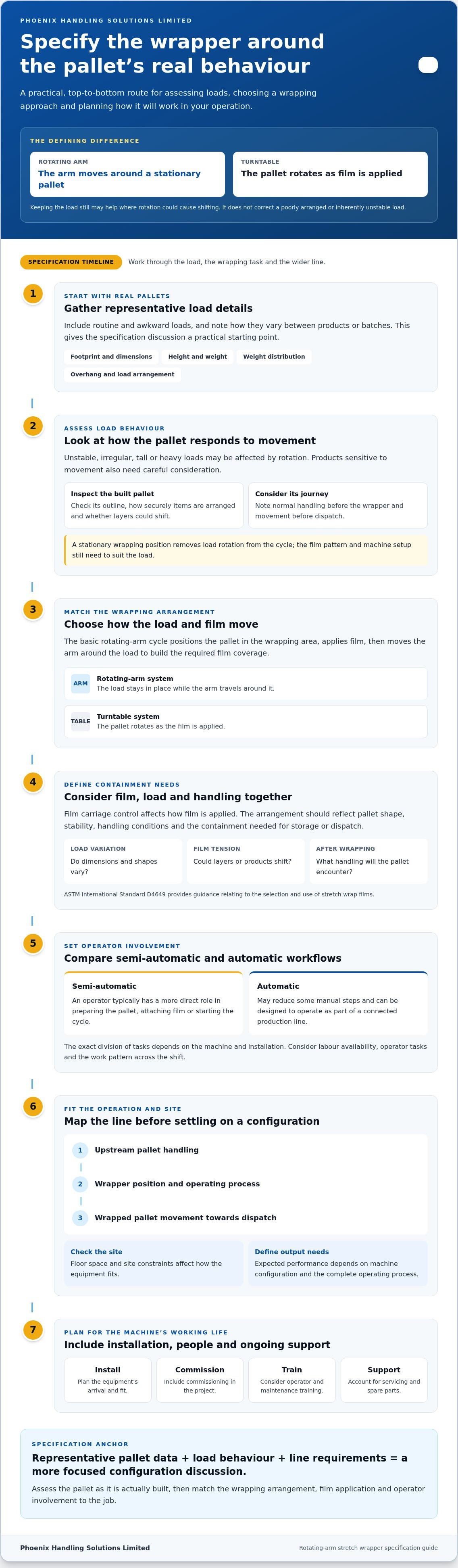
How to specify a rotating arm stretch wrapper for your operation
A useful specification starts with the work the machine must do, not with a preferred model or a list of headline features. Gather representative pallet information, describe the wrapping outcome you need and map how loads move through the site. This gives the equipment discussion a sound basis and brings practical constraints into view before configuration decisions are made.
Document the pallet and wrapping requirements
Record the range of loads rather than relying on one convenient example. Include pallet dimensions, overall load height, weight range, variation between products and features that affect stability, such as uneven layers or overhanging items. Describe the containment outcome you need and the handling or dispatch conditions wrapped pallets will encounter. These details help relate film application to the actual job.
Check the line, space and operating interfaces
Map the proposed wrapping area, including the available footprint, pallet approach and route out of the machine. Note nearby equipment, conveyor interfaces and any changes in level or direction that affect load movement. Include operator access, guarding and control requirements in the project discussion. These are planning inputs; detailed installation arrangements belong in the separate installation guide.
Use this ordered pre-enquiry checklist to build a practical brief:
- Capture representative loads. Record dimensions, height, weight range and product or pallet variation. Include examples of both routine and awkward loads.
- Describe stability and containment. Note what could shift or be damaged, what the wrap needs to contain, and how pallets are handled after wrapping.
- Set out operating demand. Estimate current and expected pallet volumes, busy periods and how consistently loads arrive. Avoid relying on a universal output threshold, as the requirement depends on your process.
- Map the site and movement. Sketch the available space, pallet approach and exit route. Mark adjacent equipment or conveyor connections that shape the line layout.
- Define the working arrangement. Explain who will operate the wrapper, which cycle steps should involve an operator, and what access, guarding and control considerations matter at the site.
Representative data makes a discussion about a rotating arm stretch wrapper more productive because it shows the range the equipment must accommodate. It avoids basing the decision on assumptions drawn from a single pallet. If products or operating patterns vary, note how often each load type appears and which one sets the most demanding wrapping requirement. Photographs or simple sketches can help explain unusual shapes and site routes, while measurements and written notes keep the brief clear.
Once the brief is assembled, Phoenix Handling Solutions Limited can use it to discuss a machine configuration suited to your loads and line conditions. Discuss your rotating arm wrapper requirements as the next step towards a practical specification.
From rotating arm wrapper selection to installation and ongoing support
Choosing a machine is one part of an equipment project. The handover from specification to installation, commissioning and training matters too: the wrapper needs to suit both the operation and the people who will use and maintain it. Phoenix Handling Solutions Limited supplies rotating arm stretch wrappers across the UK as the UK sales agent for Tosa S.P.A., and supports projects through installation and commissioning.
What to expect from supply, commissioning and training
The process starts with a discussion of the loads, operating requirements and site conditions the machine needs to accommodate. Once a suitable configuration is selected, installation puts the equipment in its intended position, and commissioning prepares it for operation. Planning these stages around the agreed application connects the original specification with how the wrapper will be used on site.
Training is part of the handover. Operator training helps the team become familiar with day-to-day machine use, while maintenance training supports staff responsible for routine machine care. The two have different purposes, so consider who needs each type and how knowledge will be shared among those operating and maintaining the wrapper.
- Equipment supply: Align the selected configuration with the load and operating requirements.
- Installation and commissioning: Bring the machine into the planned operating environment and prepare it for use.
- Operator and maintenance training: Help relevant team members understand their roles in using and caring for the equipment.
Plan for machine care and spare parts
After installation, plan how machine care will fit into your maintenance schedule. Scheduled servicing and service contracts provide ways to organise support around the wrapper’s ongoing operation. A clear approach helps the team understand how servicing fits with internal maintenance responsibilities and production demands.
Spare parts are another part of the equipment lifecycle. Replacement parts support maintenance planning when components need attention. Keep machine details and relevant parts information with operating and maintenance records, so those responsible for the equipment have useful references to hand.
Planning these arrangements before commissioning gives the project a longer view: the machine is specified for the work, installed and commissioned, then supported through training, servicing and spare parts. Phoenix Handling Solutions Limited provides these services as part of its packaging machinery support across the UK, helping businesses plan beyond the initial equipment decision.
If you’re putting together a project brief, we’d be glad to discuss your load profile, line requirements and the support needed for installation and ongoing care. Discuss your rotating arm wrapper requirements.
Turn your requirements into a practical next step
A good equipment decision starts with a clear picture of the job on an ordinary shift, including less predictable loads and changes your operation may need to accommodate. Use that picture to build a brief your team can work from. Treat the specification as a chance to align the machine with both today’s workflow and the direction you want the line to take.
As you shape the brief, consider who will use and maintain the equipment, how it will fit into the site and what support will help it remain part of the operation over time. These details make the discussion more useful and help turn an initial idea for a rotating arm stretch wrapper into a considered project.
Phoenix Handling Solutions Limited works with businesses across the UK as the UK sales agent for Tosa S.P.A. stretch-wrapping machines, with equipment supply and support planned around operational needs. Ready to discuss your next steps? Talk through your pallet wrapping requirements with our team.
Frequently Asked Questions
What is a rotating arm stretch wrapper?
A rotating arm stretch wrapper applies stretch film to a pallet by carrying the film around a load that stays in place. The arm travels around the pallet as film is applied to its sides, helping hold the goods together for handling. This differs from machines that turn the pallet during wrapping. A rotating arm stretch wrapper may be considered when load movement during the wrapping cycle is a concern.
When should you use a rotating arm stretch wrapper?
Consider one when rotating a pallet could disturb its contents, or when its shape or weight distribution makes movement a concern. For example, a delicately arranged load may need a wrapping method that avoids turning the pallet. The decision should also account for the wrapper’s working area, how pallets reach the machine and what happens after wrapping. Assess the loads you actually handle, including less common product types, before deciding.
Can a rotating arm stretch wrapper handle unstable or irregular pallets?
It may be suitable, but the specific pallet and operating conditions need assessment. An irregular outline, unevenly stacked items or an off-centre load can affect film application and how the pallet behaves during handling. Consider whether the contents are secured before wrapping, whether any items overhang and how the completed pallet will be moved. A stationary wrapping position avoids rotating the load, but it does not correct poor load construction.
What is the difference between a rotating arm and turntable stretch wrapper?
The key difference is which part moves during the wrapping cycle. With an arm wrapper, the pallet remains stationary while the arm carries film around it. With a turntable wrapper, the pallet rotates as film is applied. This distinction can affect how a load behaves during wrapping and how pallets are brought into and removed from the machine. Compare the arrangements against your load’s tolerance for movement and the space available around the wrapping point.
What is the difference between semi-automatic and automatic arm wrappers?
Semi-automatic operation generally involves an operator in more of the cycle, such as preparing the load or starting the wrap. An automatic setup can reduce manual involvement and may be arranged to work within a production line. The exact tasks depend on the machine configuration. Consider who will handle each step, how consistently pallets arrive and whether the wrapper needs to exchange loads with other equipment as part of a connected process.
How do you choose a rotating arm stretch wrapper?
Start by recording the pallet types you handle, including their dimensions, weight, stability and variation between products. Then estimate current and future wrapping demand, and note the space available for the machine and pallet movement. Map how loads arrive and leave, including nearby equipment that may affect the workflow. Representative examples, especially unusual or demanding pallets, make a configuration discussion more useful than relying on a single typical load.
Can a rotating arm wrapper be integrated into a production line?
Yes. A rotating arm wrapper can be considered for a production line, with the layout and equipment interfaces shaping the project. Map how pallets arrive at the wrapping point and where they go next, then identify relevant conveyors or handling equipment and how the cycle fits into the wider process. Operator access, guarding and control requirements also belong in the planning discussion. Installation and commissioning can then be planned around the agreed site and workflow requirements.


