

Heat is what makes a shrink wrapping machine secure a load. First, film is wrapped around the product; then heat makes it contract and conform to the product’s shape. In larger packaging operations, machinery can carry out these steps more consistently.
It’s easy to focus on wrapping, but how heat is applied matters just as much. Too little heat may leave film loose, while controlled heat helps it shrink around the product. Understanding the process makes it easier to assess which equipment suits your operation.
This guide explains how shrink wrapping works, how a heat tunnel controls the process and what affects equipment choice for different loads and production needs. It also covers how machines apply film, helping you assess whether the process fits your packaging line.
Key Takeaways
- Assess whether your products’ shapes and packaging needs are suited to a shrink-film process before choosing equipment.
- Understand how a heat tunnel applies controlled heat, helping film conform neatly around a load.
- See how sealing, conveying and heating stages work together, and which operating needs affect equipment selection.
- Learn when installation, commissioning and operator training can help bring packaging equipment into use.
What are Shrink Wrapping Machines?
A shrink wrapping machine encloses a product in film and applies heat so the film contracts around its shape. Product dimensions, output requirements and available floor space all help determine a suitable machine arrangement.
Product suitability and applications
Shrink wrapping is used for grouped retail goods, boxes and packaged products that benefit from a close-fitting film cover. Polythene and polyolefin films are used: the product is wrapped before heat is applied. Applications range from packing individual products to bundling goods for handling and distribution. The product’s shape and the required finish help guide film choice.
Choosing by size, volume and space
Start with the largest product or bundle, noting its width and height, then consider how it will enter and leave the machine. Regular, higher-volume work may suit an automated line, while occasional packing may call for a simpler setup. Side sealers can handle high-speed or extra-wide products, and wide wrappers are designed for large or heavy items. Allow space for infeed, outfeed and operator access.
Machine types and wrapping alternatives
Options include chamber machines, sleeve wrappers, side sealers and systems with a heat tunnel. The right format depends on pack dimensions, production volume and line layout. Shrink wrapping uses heat to contract film around a product or load; stretch wrapping applies tensioned film around a pallet without heat. Each method serves a different packaging process.
Film compatibility and safety requirements
Polythene and polyolefin films are used with shrink wrapping equipment, but compatibility depends on the sealing and heating method. Follow the machine instructions for film selection and operating settings. UK workplaces should assess machinery and heat-related risks, maintain safeguards and train operators. Keep flammable materials away from heat guns, because shrink film is extremely flammable. A clear work area also helps operators handle products safely.
Shrink wrapping involves covering a product with film before applying heat. Larger-scale operations may use a shrink-wrap machine. When selecting equipment, consider product dimensions, expected output and available floor space. The machine layout should also account for how products enter and leave the packing process.
Shrink tunnels and temperature control
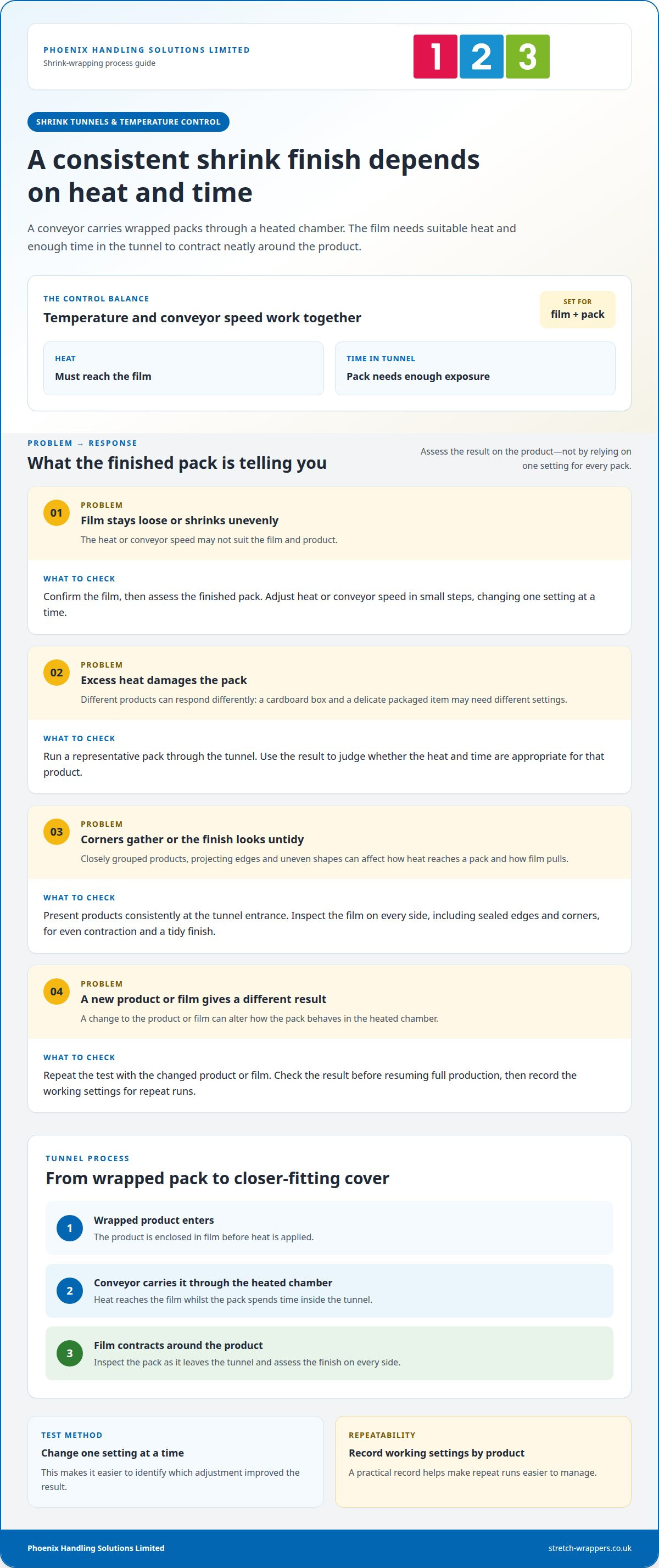
A shrink tunnel applies heat to film after the product has been wrapped. A conveyor carries each pack through the heated chamber, where the film contracts around its shape. This turns a loose film sleeve into a closer-fitting cover. Tunnels are commonly used in shrink-wrapping systems, particularly when packs move through a repeatable production process.
Temperature and conveyor speed work together: heat must reach the film, and the pack needs enough time inside the tunnel. Settings that do not suit the film or product can leave loose areas, cause uneven shrinkage or damage the pack with excess heat. A cardboard box and a delicate packaged item may respond differently, so assess the finished pack rather than relying on one setting for every product.
Start by identifying the film and measuring the product. Run a representative pack through the tunnel, then inspect the film on every side. Look for even contraction, sealed edges and a tidy finish around corners. Adjust the heat or conveyor speed in small steps, changing one setting at a time. This makes it easier to identify which adjustment improved the result.
The load pattern also affects how heat reaches a pack. Closely grouped products, projecting edges and uneven shapes can make film gather or pull differently. Present products consistently at the tunnel entrance, then assess packs as they leave. If the product or film changes, repeat the test and check the result before resuming full production.
Temperature control is therefore a balance between the film, the pack and its time in the heated chamber. A practical setup records the working settings for each product, making repeat runs easier to manage. For loads that need tensioned film rather than heat-shrunk film, consider how stretch wrapping systems suit the packaging process.
How shrink wrapping machines work
A shrink wrapping machine encloses a product in film, then applies heat to contract it. The main stages are feeding, wrapping, sealing and heating, with each preparing the pack for the next.
For a boxed product, place it on the infeed and feed film around it. The equipment forms a cover, seals the film, then moves the pack towards the heat source. A tunnel or heat gun applies heat, shrinking the film around the box.
- Feed: Place the product steadily on the infeed, keeping its orientation consistent.
- Wrap: Bring film around the product, allowing enough coverage for a complete pack.
- Seal: Close the film edges so the covering stays around the item.
- Heat: Apply heat to contract the film, then assess the finished pack.
To operate a shrink wrapping machine safely, follow the manufacturer’s instructions and train operators to use that equipment. Keep the work area clear, use fitted guards and keep flammable materials away from heat guns, because shrink film is extremely flammable.
Before production, run a representative product through the full sequence and inspect the seal, film coverage and finish. If film gathers at a corner or remains loose, review the product position and machine settings before continuing. Do not reach into moving equipment or touch hot components during operation.
Maintain the machine according to the manufacturer’s schedule and instructions. Operators should report unusual noise, damaged guards or inconsistent seals, and stop using equipment that appears unsafe. Keep service records and arrange qualified attention for faults. Routine cleaning and inspection can help identify issues before the next production run.
How shrink wrapping works
Shrink wrapping starts with choosing film that suits the product and packing method. Polythene and polyolefin are used for this process, with compatibility guided by the machine’s sealing and heating method. A single box, a bundle of products and a pallet load each need film coverage suited to their shape.
For bagged packs, size the film around the product before heating. To calculate the maximum bag size, reduce each dimension by half the pack height. This accounts for the material needed to cover the pack’s sides. A bag that is too tight can make loading difficult, while excess film can leave a loose finish after shrinking.
Smaller operations can use a heat sealer and heat gun. Place the product inside the film, then seal the opening. Apply heat evenly so the film contracts around the product instead of gathering in one area. Heat guns provide temperatures suitable for shrinking film without damaging it, but operators must still follow the equipment instructions.
For larger production runs, a shrink wrapping machine can make sealing and heating a more continuous process. The operator places or feeds the product; the equipment wraps and seals the film, then heat shrinks it around the load. A heat tunnel is commonly used to apply heat, while a conveyor carries packs through the process.
After a trial pack, inspect the seal, corners and film tension. For example, loose film at one end of a box may call for a change to film placement or heating. Adjust one part of the process at a time, then assess another pack. Keep flammable materials away from heat guns, as shrink film is extremely flammable.
If your pallet loads need a different wrapping approach, explore stretch wrapping options alongside shrink film.
Phoenix Handling Solutions Limited: Machine servicing and service contracts
Phoenix Handling Solutions Limited supplies and installs pallet-wrapping equipment for businesses that need a consistent, practical packaging process. Its range includes rotating turntable, rotating arm and ring stretch wrappers. Installation, commissioning and operator training support the introduction of this equipment into production.
Load movement and line layout help determine which wrapper suits the operation. A turntable rotates the pallet during wrapping, while rotating arm and ring systems apply film around a stationary load. Consider these differences alongside product flow when choosing equipment. Commissioning and training help operators understand the installed system and use it as intended.
If you’re planning packaging equipment for pallet loads, contact Phoenix Handling Solutions Limited to discuss your requirements.
Plan the next step for your packaging line
Choosing equipment is also an opportunity to review how each pallet moves through your operation, from packing to dispatch. Consider the loads you handle, available space and wrapping method that fits your process. Use these priorities to guide a practical equipment discussion.
A shrink wrapping machine may suit a process that uses film contracted by heat, while pallet wrapping takes a different approach. Phoenix Handling Solutions Limited supplies rotating turntable, rotating arm and ring stretch wrappers for businesses wrapping pallet loads. Start with a clear understanding of your products and workflow rather than choosing equipment by name alone.
If you’re planning a change or assessing your next packaging investment, contact Phoenix Handling Solutions Limited to discuss your requirements. A straightforward conversation can help you take the next step with a better understanding of the equipment options available to your operation.
Frequently Asked Questions
How should I choose equipment for my product and production volume?
Match the machine to your products’ dimensions, pack shapes, required output and available line space. Consider whether a shrink wrapping machine will handle your regular production pattern and any changes between pack formats. A trial using representative products can help assess the finished pack and workflow. Phoenix Handling Solutions Limited can advise on a suitable shrink wrapping machine for your application and technical requirements.
What UK health and safety rules apply to shrink wrapping machines?
UK workplaces should assess machinery and heat-related risks, maintain safeguards and train operators. Follow the machine’s instructions, use fitted guards, keep the work area clear and keep flammable materials away from heat guns.


