

An industrial stretch hooder applies film without heat. Four mechanical jaws stretch and pull a tubular film hood over the pallet load, using pneumatic components. This differs from shrink wrapping, which uses heat to shrink film around a load.
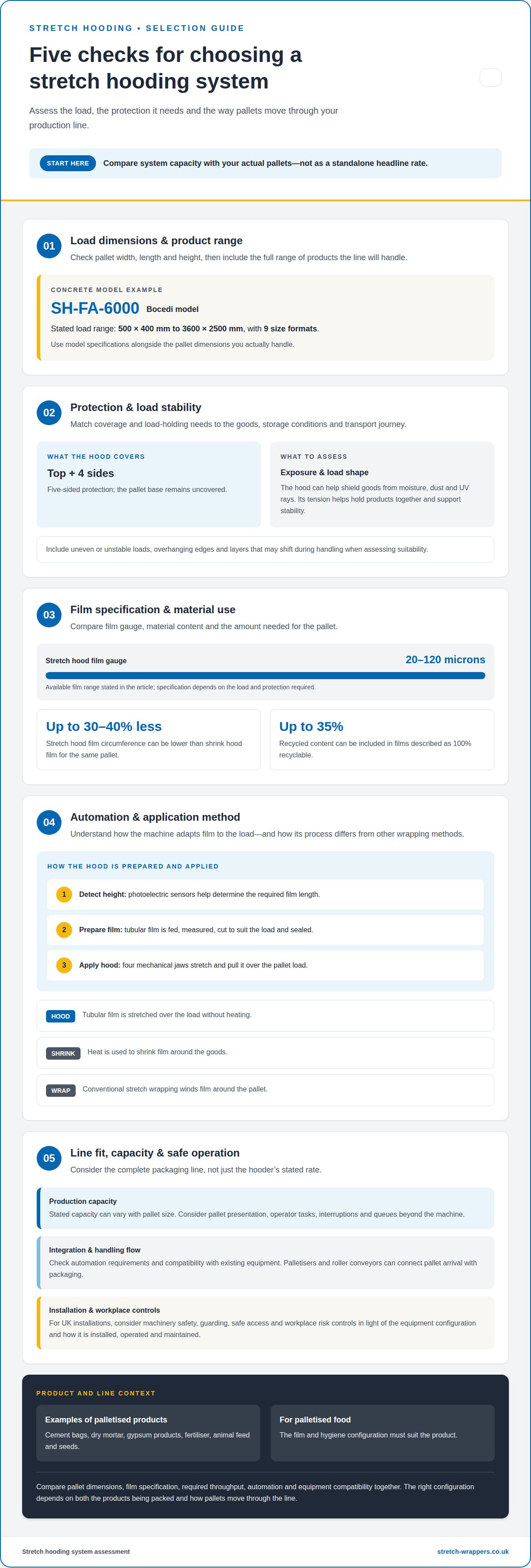
Choosing pallet packaging is about more than the wrapping method: the protection needed, the shape of the load and the pace of the production line all matter. Stretch hooding offers five-sided protection, covering the top and sides of a pallet, and its film circumference can be up to 30-40% less than that of shrink hood film used for the same pallet.
This guide compares stretch hooding with shrink film and conventional pallet wrapping, including the protection each method provides and the factors to consider when assessing a system for your loads and production needs. You’ll also find practical criteria for choosing packaging machinery that fits your operation.
Key Takeaways
- Compare packaging methods by the protection your goods need and how each process fits your production line.
- Consider how a hood can help shield palletised products from moisture, dust and UV rays during storage and transport.
- Assess system speed alongside pallet dimensions, load heights and line integration, rather than relying on a headline rate alone.
- For uneven or unstable loads, look at how the packaging method holds the load together and suits its shape.
Comparison with shrink film and stretch wrapping
A stretch hood uses tubular plastic film, stretched and released around a pallet without heating. Four mechanical jaws pull the hood over the load. Shrink film, by contrast, requires heat to shrink around goods, while conventional stretch wrapping winds film around the pallet. These differences affect both the packaging process and the equipment required on the line.
Film use is another point to compare. The circumference of stretch hood film used for a pallet can be up to 30-40% less than shrink hood film for the same pallet. Stretch hood film is available in gauges from 20 to 120 microns, so the required film specification depends on the load and its protection needs. The films are described as 100% recyclable and can contain up to 35% recycled content.
Preparing a hood involves measuring, cutting and sealing the film. Photoelectric sensors can detect pallet height and help determine the required film length. The system feeds tubular film, cuts it to suit the load and seals it to form a hood. This links the film length to the pallet’s dimensions, rather than applying the same length regardless of load height.
Consider a pallet of bagged building materials moving through a packaging line. Stretch wrapping winds film around the load, while a stretch hood is drawn over its top and sides. Shrink film adds a heating stage; stretch hooding does not. Film gauge, recycled content and the amount of film used all influence material choices, while the packaging method determines how film is applied. Comparing these steps helps identify which approach suits the product and line.
Stretch hooding compared with conventional pallet wrapping
Conventional pallet wrapping winds stretch film around a load; stretch hooding pulls a tubular hood over its top and sides. The hood provides five-sided protection, leaving the pallet base uncovered. Its tension helps hold products together and support load stability during storage and transport. For example, a pallet of bagged goods can be covered across the top and sides while the base remains accessible to handling equipment.
This coverage helps protect palletised goods from moisture, dust, UV rays and other environmental factors. It can be useful when loads move between storage and transport or face changing conditions. However, it does not replace choosing packaging suited to the product and environment. Stretch hooding can also secure chemical products and industrial raw materials, where containing items and protecting them from external factors matter.
Automatic recognition can support consistent application across different load heights. Photoelectric sensors detect pallet height and help determine the appropriate film length. The machine positions the hood to suit each load instead of applying a fixed length to every pallet. This is useful on lines handling different package heights, as sensor-based positioning helps match the hood to each pallet.
In automated packaging, film feeding, stretching, hood application and sensor-based positioning can support continuous operation. Stretch hood machines can also integrate with palletisers and roller conveyors, linking load arrival with the packaging stage. For UK installations, consider machinery safety, guarding, safe access and workplace risk controls, including conveyor integration. The relevant assessment needs to account for the equipment configuration and how it is installed, operated and maintained. To compare wrapping approaches for different pallet types, consider the range of pallet wrapping systems alongside the protection each load needs.
Benefits of stretch hood packaging
Stretch hood packaging suits palletised products that need a consistent packaging step within a production line. Examples include cement bags, dry mortar, gypsum products, fertiliser, animal feed and seeds. For palletised food, the film and hygiene configuration must suit the product. Consider the packaging setup alongside the goods being handled and how the machine connects with other line equipment.
To choose a machine, compare production capacity, pallet dimensions, film specifications, automation requirements and compatibility with existing equipment. Start with your pallets and product range, then consider required throughput and how loads reach the packaging stage. A palletiser or roller conveyor may form part of an integrated system, so account for layout and handling flow as well as the hooding machine’s stated capacity.
Bocedi’s SH-FA model names offer concrete capacity points for comparison. Stated production capacity can vary with pallet size, so compare a machine’s rate with the loads being handled. Those differences show why a production rate should be considered against the actual load dimensions, rather than treated as a standalone measure. The SH-FA-6000 can hood loads from 500×400 mm to 3600×2500 mm, with 9 size formats.
Bocedi is the manufacturer named for the SH-FA models, giving UK buyers a specific model family to assess. Compare each model’s stated capacity and load range with your pallet dimensions, film specification and automation needs. An industrial stretch hooder is most useful when its configuration suits both the products being packed and the way pallets move through the line. This comparison helps define requirements before installation and integration.
How fast can the system run?
A machine’s stated cycle rate is only one part of production planning. Consider packaging performance across the whole line, including pallet presentation, operator tasks and interruptions elsewhere in production. If the hooder waits for a pallet or finished pallets queue beyond it, actual line output will differ from the machine’s standalone rate. Map these pauses before comparing system options.
Assess uneven or unstable loads using representative products, not just neat sample pallets. Include tall, low or irregularly stacked packages, and note any overhanging edges or layers that shift during handling. These details help establish whether loads arrive consistently and how packaging should be configured. A trial using normal production loads can reveal handling issues that a standard pallet may not show.
For a turnkey packaging line, define the handover points between pallet formation, hooding and the next stage. Plan how completed loads leave the packaging area, how interruptions are handled and who coordinates equipment interfaces. This keeps the line coherent instead of treating the hooder as an isolated machine. Documenting the expected product mix also gives operators a useful reference for routine production.
Package size range should be considered across the goods actually handled, including the extremes and any awkward formats. Record the pallet footprint, load height and packaging pattern for each representative product, then use these requirements to assess the proposed configuration. For uneven loads, pay particular attention to how the goods are arranged before packaging, since the machine applies packaging to the presented load rather than correcting its arrangement. To discuss a packaging-line approach, explore stretch hooding system options against your production requirements.
Phoenix Handling Solutions Limited: Rotating turntable stretch wrappers
Phoenix Handling Solutions Limited can help you assess pallet wrapping machinery against your load shape, throughput and production-line layout. If a rotating turntable wrapper suits your operation, it applies stretch film around palletised goods; rotating arm and ring stretch wrappers offer alternative machine configurations.
When planning a new packaging line or changing existing equipment, installation, commissioning and training can support the transition from machine selection to operation. These services help when a packaging system must work alongside existing processes and operators need practical instruction. Start by discussing the pallets you handle, the packaging method you’re considering and how the equipment must fit your line.
To discuss your pallet packaging requirements, contact Phoenix Handling Solutions Limited.
Plan the next step for your packaging line
Before choosing an industrial stretch hooder, focus on what your line needs to do. Set out the products you package, the range of pallet formats, how loads move through your site and the protection required during storage and transport. This gives you a practical basis for deciding whether hooding suits your operation or another wrapping approach is more suitable.
Phoenix Handling Solutions Limited supplies rotating turntable, rotating arm and ring stretch wrappers, offering different ways to package pallets. Consider how each machine type fits your load handling and production layout, then compare it with the packaging outcome you need. A clear view of the process makes it easier to discuss suitable equipment and the next steps for your line.
If you’re ready to explore a suitable approach, contact Phoenix Handling Solutions Limited to discuss your packaging requirements. A considered choice can help you move forward with confidence.
Frequently Asked Questions
Does the machine use heat, hydraulics or pneumatics?
The system uses mechanical and pneumatic components. When planning your site, account for the pneumatic connection alongside the machine’s electrical and layout requirements and other packaging equipment. Hydraulic requirements depend on the specific configuration, so review the machine’s technical documentation during line design. This helps identify utility and connection needs before finalising installation plans.
How does it work?
For consistent processing, pallets must arrive in a position and condition the machine can handle. Record load formats and film requirements, then map how pallets enter and leave the packaging area. The machine configuration determines the operating sequence, so training should cover normal production, format changes and what operators should do when the line stops.
How easy is roll change and maintenance?
Follow the machine’s operating and maintenance instructions for roll changes and routine care. Include these tasks in operator training, and have the correct film roll and tools ready before a changeover. A planned maintenance schedule helps teams organise inspections around production, while servicing and spare parts support can address equipment needs throughout its working life.
What are the energy and protection benefits?
Assess energy use across the complete packaging line, including conveyors and upstream or downstream equipment, rather than inferring it from the hooder alone. For protection, consider the goods’ handling route and storage conditions, then decide whether the packaging method meets those needs. This makes the choice specific to your operation rather than assuming one approach suits every product.
What does a stretch hooder do and why use one?
A stretch hooder packages palletised goods with a fitted film cover. It may suit products such as insulation, appliances and corrugated goods when the production line needs a repeatable packaging step. Before choosing a system, list the products and pallet formats it must handle, then compare them with the machine configuration and its connection to the surrounding line.
What film gauges and sustainability options are available?
Film options vary in thickness and recycled content. Choose a specification by considering the load’s weight, edges and handling conditions, then assess how the film performs with the machine and packaging process. Recyclability and recycled content are separate sustainability considerations. Set the required film properties against product protection and operational needs before finalising the specification.


