

A wrapper that’s still running can still be using film inefficiently or developing faults that interrupt production. Regular servicing helps keep it operating as intended, with lower-use operations typically scheduling a visit every 4 or 6 months; a pallet wrapper service contract can make that maintenance part of a planned routine.
It’s understandable to focus on breakdowns, but inspections and adjustments can identify wear and help maintain wrapping performance before a fault stops production. This guide explains what engineers may inspect, how servicing supports machine performance and what to consider when choosing a pallet wrapper service contract.
Annual contract costs depend on the case and are given after a quote request, with the number of machines and service level shaping the assessment. You’ll also learn what to look for in response-time terms, so you can weigh the cover against your operation’s needs and keep your wrapping equipment properly supported.
Key Takeaways
- If a wrapper handles 50 or more pallets per day, plan for quarterly servicing to help keep maintenance in step with throughput.
- During inspections, engineers check drive belts, support wheels and rollers, and can adjust the machine to suit new film before it is introduced.
- Compare contract cover by its service level and the number of machines, and read the callout terms to understand how response times are handled.
- For machinery selection and setup, Phoenix Handling Solutions Limited offers rotating turntable, rotating arm and ring stretch wrappers, with installation, commissioning and training.
Why Service Your Pallet Wrapper?
For lower-use UK operations, servicing every 4 or 6 months is considered acceptable. Planned maintenance can identify wear before it interrupts wrapping, while contract terms set how repair call-outs are handled.
Emergency Repairs and Contract Call-outs
A pallet wrapper service contract sets out how to report faults, how calls are prioritised and which repair costs are covered. Read the call-out terms for response targets, engineer attendance, travel, labour and replacement parts rather than assuming every fault receives emergency treatment. This gives your team a clear process when a breakdown affects production.
Pallet-wrapper servicing in the UK is available from machinery suppliers and independent packaging-equipment engineers. With Phoenix Handling Solutions Limited, UK-based engineers cover the whole of the UK. Check that the agreement identifies the machines and sites it covers.
Contract, Lease and Warranty Comparisons
A service contract arranges ongoing maintenance and may include repair call-outs, while a warranty covers faults under its own terms. Leasing concerns use of the machine and its payment arrangement, not necessarily maintenance cover. Compare each agreement’s repair scope, parts, labour and duration to see what suits your operation.
For example, a warranty may apply to a new wrapper, but continued servicing can still matter as usage and wear build. Separate the machine’s purchase or lease terms from its maintenance arrangements, then compare what each document covers.
Contract Risks and Exclusions
Look for exclusions covering accidental damage, misuse, consumable parts, travel or faults caused by incorrect operation. Note whether the contract covers every machine and site, and whether repair parts and labour are included. These details determine what happens when an engineer attends and which costs remain outside the agreement.
Check that the agreement explains how to report a fault, what information operators must provide and what access the engineer needs. Clear terms help prevent delays caused by uncertainty about the fault, machine location or operating conditions.
For collection, have goods ready to load and be prepared to help place them on the pallet. The driver assists, but does not do all the work, so plan staff and space around loading.
A customised pallet wrapper’s mast is 2.4m high. For a rotating-arm machine, the arm moves around the pallet, helping maintain stability for heavy or unstable loads. Check the available operating space against the machine’s layout before installation.
Machine inspection, calibration and optimisation
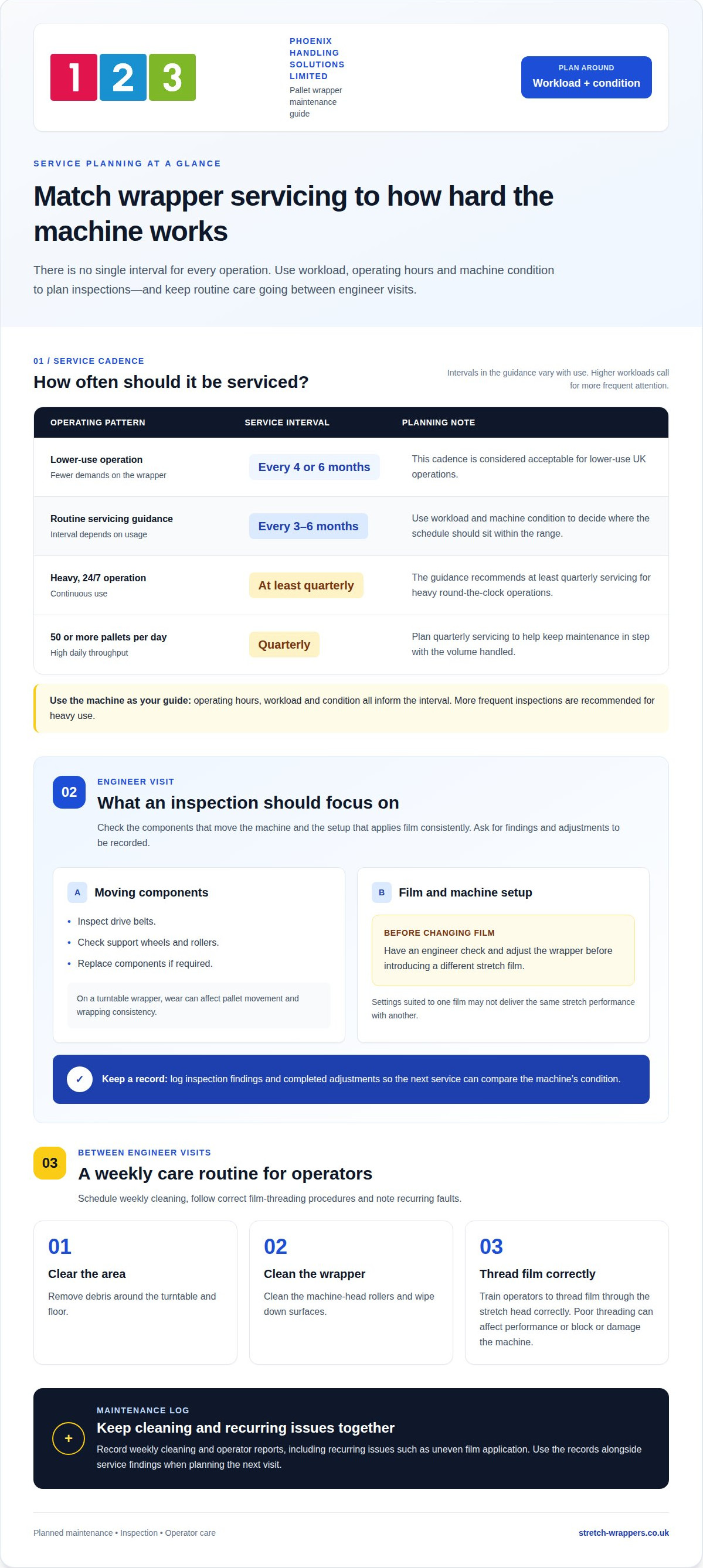
Service intervals should reflect workload, machine condition and operating hours. UK recommendations put routine servicing at 3-6 months, depending on usage. Heavy 24/7 operations need at least quarterly servicing, while wrappers handling 50 or more pallets per day should also be serviced quarterly.
A specialist inspection should cover the parts that keep the machine moving and applying film consistently. Engineers check drive belts, support wheels and rollers, replacing them if required. On a turntable wrapper, wear in these components can affect pallet movement and wrapping consistency. Ask for inspection findings and completed adjustments to be recorded, so the next service can compare the machine’s condition.
Film changes need attention too. Before introducing a different stretch film, have an engineer check and adjust the wrapper for the new material. Settings suited to one film may not deliver the same stretch performance with another. This helps ensure a film change is not treated as a simple consumables swap when the machine setup also needs review.
There isn’t one service interval that suits every UK operation. Use workload and machine condition to plan the schedule, with more frequent inspections for heavy use. Safe operation also depends on keeping the machine maintained, acting on faults and ensuring operators understand the correct procedures. Keep service records alongside operator reports, including recurring issues such as uneven film application.
Between engineer visits, schedule weekly cleaning: clear debris around the turntable and floor, clean the machine-head rollers, and wipe down surfaces. Train operators to thread film correctly through the stretch head, since poor threading can affect performance or block or damage the machine. Record cleaning and recurring faults in the maintenance log.
To compare how a turntable design suits your load and workflow, explore stretch wrapper options alongside your inspection requirements.
Annual service contract costs
The proposed service level and number of machines shape the contract assessment. Compare the scope with your packaging operation, then consider the balance between planned maintenance and repair support.
Available Service Plan Types
Preventive maintenance plans focus on scheduled inspections and adjustments, helping you plan visits around production. Full-service agreements may combine planned work with repairs, but the precise scope depends on the written terms. Pay-as-you-go support charges for work as it is needed, rather than spreading maintenance through an annual agreement.
Match the contract structure to your wrapper’s workload and the support your team needs. An operation seeking predictable scheduled visits may prefer preventive cover, while a site wanting repair support should compare full-service terms. Pay-as-you-go support may suit occasional needs, but each fault can require a separate quote.
Parts, Labour and Call-out Charges
Parts, labour and call-out charges are not automatically included in every service plan. Check each item separately in the agreement, including whether replacement components, engineer time and travel are covered or billed separately. This distinction matters when comparing plans with different service levels.
Ask how the agreement handles repairs outside scheduled maintenance. For instance, a plan might cover inspection labour but charge separately for a replacement part or additional attendance. Read exclusions alongside the included work, so you don’t mistake the annual commitment for unlimited repairs.
For a useful comparison, list the machines and sites covered, then match each plan against required visits, repair support and included components. The number of machines and service level shape the assessment, as does whether the agreement includes parts, labour and call-outs. A single wrapper needing planned inspections has different requirements from several machines needing broader repair support.
The proposed terms depend on the number of machines and the service level. Compare like-for-like coverage, including the work and support included, rather than focusing on the annual total alone.
Engineer response times
A response-time clause explains what happens after you report a wrapper fault. Separate the time for acknowledgement from engineer attendance and repair completion, as these are different stages. A quick call-back, for example, does not mean the machine is already operational. A clear service agreement sets out how faults are logged, prioritised and progressed, giving your team a practical sequence to follow.
Assess urgency by describing the fault and its effect on production. Tell the service team whether the machine has stopped, is operating inconsistently or is producing unstable loads. Include the wrapper type, site address, fault symptoms and any steps already taken. Accurate details help the engineer understand the issue and plan an appropriate response.
Read the contract for its response targets and the conditions attached to them. Check how the provider classifies an urgent breakdown, which contact route applies during normal working hours, and whether travel or call-out charges sit outside the annual fee. Confirm how the agreement treats parts availability, follow-up visits and faults that need further assessment.
- Record the machine’s fault message or visible symptoms before reporting the issue.
- Explain whether wrapping has stopped or load stability is affected.
- Keep the service contact route and contract reference accessible to operators.
These steps help the engineer assess the fault without relying on a vague report such as “the wrapper isn’t working”. A description like “the turntable stops during a cycle” gives a more useful starting point. Record when the fault appeared and whether restarting the machine changed its behaviour.
Before signing, compare the response wording with your production needs and the agreement’s exclusions. Ask how updates are communicated if diagnosis or repair takes longer than expected, and who authorises work beyond the contracted scope. For support that fits your wrapping operation, discuss stretch wrapper servicing and planned maintenance.
Phoenix Handling Solutions Limited: Rotating turntable stretch wrappers
Phoenix Handling Solutions Limited supplies pallet wrapping equipment to suit different loads and workflows. Turntable stretch wrappers rotate the pallet during wrapping, while rotating-arm and ring wrappers offer different machine arrangements. If you’re reviewing equipment alongside maintenance planning, consider how the wrapper’s design fits your loads, available floor space and production process.
For a new installation, Phoenix Handling Solutions Limited also provides installation, commissioning and training, helping your team prepare the machine for operation and learn its controls. This can be a practical next step when selecting a wrapper or bringing new equipment into your packaging line. To discuss your requirements, contact Phoenix Handling Solutions Limited or visit stretch-wrappers.co.uk.
Plan support around your next step
Build maintenance planning around likely changes to production, pallet formats and line layout. These practical details can help shape discussions about support for existing equipment and whether your wrapping setup remains suitable for the work ahead.
Phoenix Handling Solutions Limited supplies rotating turntable stretch wrappers, rotating-arm stretch wrappers and ring stretch wrappers. If you’re considering new machinery, think about how the machine arrangement fits your loads and packaging process, then bring those requirements into the discussion.
If you’re ready to discuss machinery or servicing for your operation, contact Phoenix Handling Solutions Limited. A straightforward conversation can help you consider the next step with confidence.
Frequently Asked Questions
What is included in a pallet wrapper service contract in the UK?
A pallet wrapper service contract sets out agreed servicing and repair support, but inclusions vary by plan. Check that the document identifies the covered machines and sites, then review its treatment of scheduled visits, labour, call-outs and replacement parts. For clarity, record each wrapper’s model and serial number against the agreement, so the covered equipment is easy to identify when arranging work.
How much does a pallet wrapper service contract cost in the UK?
The price depends on the case and is given after a quote request. The number of machines and service level affect the assessment, alongside the maintenance and repair support included. To make a useful comparison, provide an accurate equipment list and describe how each wrapper is used. Then compare the proposed scope, rather than judging the annual total without considering what it covers.
What are typical response times and repair SLAs for pallet wrapper maintenance?
Response commitments are set by each agreement, so check the stated service levels rather than relying on a general expectation. Look for separate timings for acknowledging a report, attending site and progressing a repair. If a fault stops one wrapper but leaves another running, explain the production impact when reporting it. This helps the service team assess priority and communicate the next steps.
What should businesses check before signing or renewing a pallet wrapper service contract?
Before signing or renewing, compare the proposed cover with your current machine list, operating pattern and fault history. Note any new wrappers, changed shifts or recurring issues since the last review, then check how these affect the agreement’s scope. Confirm which sites and machines are covered, what work is excluded and how additional repairs are handled. Keep the signed terms accessible to staff responsible for maintenance.
What are the legal and safety responsibilities for maintaining pallet wrapping machines in the UK?
Safe operation requires maintaining the machine, acting on faults and ensuring operators understand the correct procedures.


