

Replacement parts for a pallet wrapper aren’t interchangeable just because they look similar. Pallet stretch wrapping machines use components such as rollers, motors, brakes and tension levers, along with bearings, including blind bearings and tension-rod linear plain bearings. The correct fit depends on the machine model and application, so pallet wrapping machine spare parts must match the equipment they’re intended for.
It’s understandable to focus on the failed part, but identifying its role and fit helps prevent ordering the wrong component and supports effective maintenance planning. This guide explains what common wrapping-machine parts and bearings do, why replacement requirements vary by model, and what to consider when sourcing genuine parts in the UK. It also covers how maintenance support can help when a fault points to more than one worn component, taking you from identifying the issue to choosing a suitable replacement.
Key Takeaways
- Use the wrapper’s make and model to narrow down the correct replacement, then match the part’s identification details before ordering.
- Check bearing type and fit carefully, as similar-looking parts may not suit the same machine or application.
- Genuine replacements can help keep parts compatible with the machine; the right sourcing route depends on the component required.
- If equipment selection is also on your mind, consider whether a turntable, rotating arm or ring wrapper best suits your pallet-wrapping process.
Parts for pallet stretch wrapping machines
A pallet wrapper relies on mechanical, electrical and film-handling components working together. Rollers are rotating drums or cylinders that wrap stretch film around a pallet, with their size and type varying by machine model and application. Motors power movements such as roller rotation, while brakes control stopping during the wrapping cycle. A tension lever allows operators to adjust film tension to secure the load.
Other components support detection and film delivery. Sensors register machine positions or operating conditions, while belts transfer movement between mechanical parts. The film carriage holds and feeds the film roll as the wrapper travels around or turns the load. A fault in one area can affect the wrapping result elsewhere, so identify the symptoms before choosing a replacement.
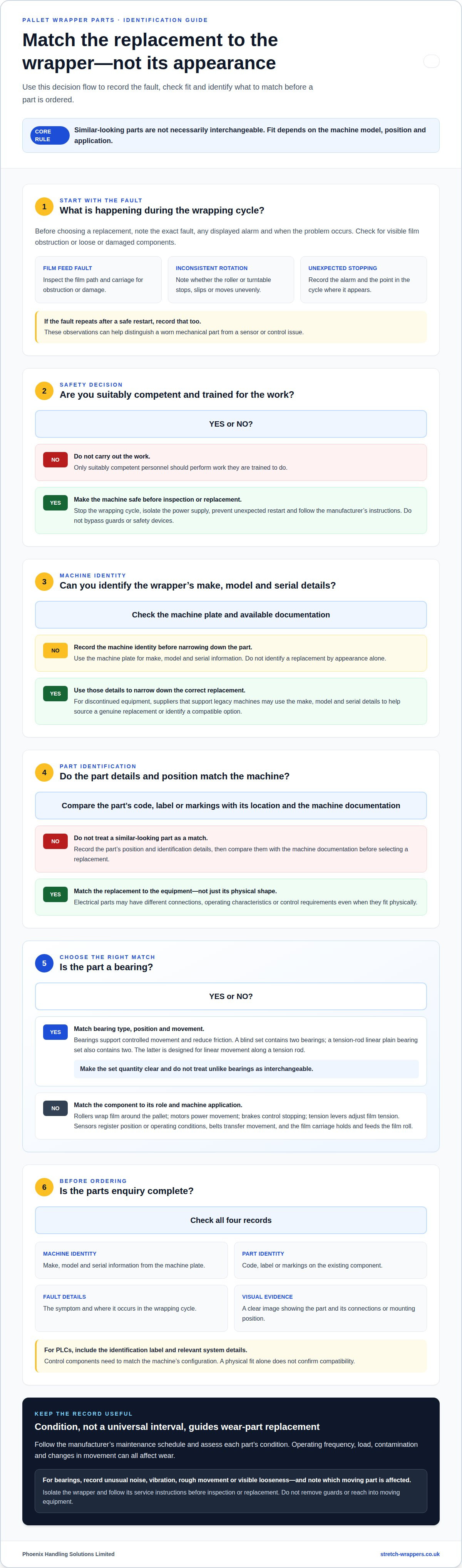
To replace a sensor, roller, belt or film carriage, identify the machine make and model first. Then compare the part’s position and identification details with the machine documentation. Isolate the equipment and follow its service instructions. Fit the matching replacement and check operation before returning the wrapper to production.
Servicing requires safe control of the machine’s electrical and mechanical movement. Stop the wrapping cycle, isolate the power supply, prevent unexpected restart and follow the manufacturer’s instructions. Only suitably competent personnel should carry out work they’re trained to perform.
Before ordering parts, note the exact fault, any displayed alarm and when the problem occurs. Check for visible film obstruction or loose or damaged components, and note whether the fault repeats after a safe restart. Don’t bypass guards or safety devices to test operation.
- Film feed fault: inspect the film path and carriage for obstruction or damage.
- Inconsistent rotation: note whether the roller or turntable stops, slips or moves unevenly.
- Unexpected stopping: record the alarm and the point in the cycle where it appears.
These observations can help distinguish a worn mechanical part from a sensor or control issue. Record the part’s location and machine identification before adding a replacement to the stock list. This makes it easier to match future orders to the correct wrapper.
Bearings
Bearings support controlled movement inside pallet wrapping machines. They reduce friction between moving parts, helping shafts, rollers and sliding assemblies move along their intended paths. The bearing type must suit its position, movement and machine design. A similar-looking replacement may not fit or perform correctly.
Two examples used in wrapping equipment are blind bearings and tension-rod linear plain bearings. A blind set contains two bearings, as does a tension-rod linear plain bearing set. The first name identifies a bearing configuration; the second describes a bearing designed for linear movement along a tension rod. Match the set description and machine position before ordering.
Look for changes during normal operation. Grinding or rattling noises, increased vibration, rough movement or visible looseness can indicate wear. A bearing may also affect the assembly it supports, causing uneven roller movement or inconsistent film application. Record when the symptom occurs and which moving part is affected. This information helps distinguish bearing wear from a loose fitting, damaged belt or another mechanical fault.
How often should pallet wrapping machine wear parts be replaced? Follow the machine manufacturer’s maintenance schedule and assess each part’s condition, rather than applying one replacement interval to every component. Operating frequency, load, contamination and changes in movement can all affect wear.
For stock planning, list each bearing by machine model, position and type. Make the two-bearing set quantity clear, then compare the record with maintenance findings and replacement history. This helps prevent unlike bearings being treated as interchangeable and shows which parts need replenishing before scheduled work.
During inspection, note unusual noise, movement and any visible damage, but don’t remove guards or reach into moving equipment. Isolate the wrapper and follow its service instructions before inspection or replacement. Where recurring bearing wear sits alongside other mechanical symptoms, stretch wrapper maintenance can help structure inspection and parts planning around the equipment.
Genuine spare parts sourcing
Genuine parts are made for, or supplied as replacements for, a machine’s specified components. Sensors, switches, programmable logic controllers (PLCs), motors and drives all require the right electrical and mechanical compatibility. A part may fit physically but have different connections, operating characteristics or control requirements. Match the replacement to the equipment, not just its appearance.
How can I find replacement parts for discontinued pallet wrapping machines? Start with the machine make, model and serial details, then identify the component and its position. Suppliers that support legacy equipment can use these details to help source genuine replacements or identify a compatible option.
Build a clear parts enquiry before placing an order. Include:
- Machine identity: record the make, model and serial information from the machine plate.
- Part identity: note any code, label or markings on the existing component.
- Fault details: describe the symptom and where it occurs in the wrapping cycle.
- Visual evidence: provide a clear image showing the part and its connections or mounting position.
These details help distinguish similar sensors, switches or drives. For a PLC, include its identification label and relevant system details, as control components need to match the machine’s configuration. Avoid ordering based only on a broad description such as “wrapper sensor”, which may refer to different functions.
Do UK suppliers offer warranties, delivery or installation for pallet wrapper spare parts? Suppliers may offer delivery and warranty terms, while installation is generally a separate service from supplying a component. Check the written order terms to understand what applies to the specific part and any installation work.
For stock control, keep a record linking each genuine replacement to its machine and component code. Mark whether it is held on site, ordered or fitted, and update the record after maintenance. This gives purchasing and engineering staff a shared reference, especially when a site operates several wrapper models or retains older equipment.
For electrical parts, record connector and control-system details before replenishing stock. A drive or PLC selected without this information may not suit the existing setup, even if its label looks similar. Clear identification supports accurate sourcing and helps maintenance teams plan replacements around the equipment they run.
How do I identify the correct pallet wrapper spare part by make and model?
Begin with the wrapper’s identification plate, usually fixed to its frame or electrical cabinet. Record the manufacturer, model designation and serial number exactly as shown. Include letters, suffixes and punctuation, as these can distinguish machine versions. For example, Tosa and Robopac wrappers each have their own identification details.
Next, locate the part and capture its identifying information. A structured record helps staff match the replacement to the correct machine:
- Write down the make, model and serial details from the plate.
- Record the part name, code and markings from the component.
- Note where it fits, such as the film carriage or control cabinet.
- Describe the fault and when it appears during the wrapping cycle.
Compare those details with the machine’s parts documentation or electrical diagrams. A sensor, switch or motor may look similar to another but differ in connection, mounting or function. For a PLC or drive, capture the full identification label and connector arrangement. Don’t rely on a partial code or a photograph alone.
Keep a stock record for every wrapper on site. Link each part code to its machine model, serial number and location. Mark whether the item is held, fitted or awaiting replenishment. If one site runs several models, keep separate entries rather than grouping parts under broad descriptions such as “roller” or “sensor”.
Before ordering, compare the recorded part code with the removed component and machine documentation. If markings are worn, use the machine plate, installation records and a clear photograph showing the component’s position. Include the machine’s control-system details for electrical components, as these can affect compatibility.
Organise your identification records alongside your wrapper spare parts requirements, so replacement decisions use the same machine and component details each time.
Phoenix Handling Solutions Limited: Rotating turntable stretch wrappers
Phoenix Handling Solutions Limited offers rotating turntable stretch wrappers for businesses reviewing their pallet-wrapping equipment needs. The right wrapper type depends on the load and how pallets move through your packing area. A turntable wrapper rotates the pallet, while rotating arm and ring wrappers use different wrapping arrangements.
If you’re reviewing equipment alongside your spare-parts stock, consider whether the wrapper’s layout and operation suit your handling process. Phoenix Handling Solutions Limited also provides installation, commissioning and training, supporting the move from equipment selection to practical use. These services are relevant when replacing a wrapper or planning a new packaging line, rather than when you only need to identify a part for existing machinery.
To discuss suitable wrapper options and support, contact Phoenix Handling Solutions Limited or visit stretch wrapper options.
Make your next stock review a practical one
Use your next stock review to connect purchasing decisions with the equipment your site runs. A parts register is most useful when staff can act on it: assign responsibility, record when items are used and update the list after maintenance. This makes pallet wrapping machine spare parts planning an ongoing operational task, rather than a scramble after a fault.
If you’re also considering a replacement wrapper, match the equipment format to your handling process and available space. Phoenix Handling Solutions Limited offers rotating turntable, rotating arm and ring stretch wrappers, giving businesses different equipment arrangements to consider alongside their stock plans.
For a practical conversation about wrapper options, contact Phoenix Handling Solutions Limited. A considered review can help your team decide what to plan for next and keep its equipment decisions grounded in day-to-day requirements.
Frequently Asked Questions
What spare parts are commonly needed for pallet wrapping machines?
Common replacements include rollers, motors, brakes, tension levers, sensors, switches, belts, film carriages and bearings. The parts needed depend on the wrapper’s design and the fault identified. For example, a machine that detects pallet position incorrectly may need sensor attention, while rough movement could point to a bearing or drive component. Keep stock records tied to each machine rather than treating every part as interchangeable.
Where can I buy pallet wrapping machine spare parts in the UK?
You can source replacements from machinery suppliers that support pallet wrapper spare parts. Phoenix Handling Solutions Limited supplies genuine spare parts, including sensors, switches, PLCs, motors and drives. For an enquiry, provide the machine’s make and model, along with the component details and fault symptoms. This gives the supplier useful context to identify the relevant part and helps your team plan replenishment.
Are OEM or aftermarket pallet wrapping machine parts better?
OEM parts are made by the original equipment manufacturer, while aftermarket parts come from other manufacturers. The practical choice depends on compatibility with the wrapper, the required function and whether the part’s identification matches the equipment. For controls or drive components, compare electrical details as well as physical fit. Record the selected part’s source and code in your maintenance records so future replacements follow a consistent, traceable process.


