

Good pallet wrapper care is part of the working week, not something to leave until a fault appears. A pallet wrapper maintenance checklist can include daily checks of key functions and cleaning, weekly checks of film tension and lubrication, and a monthly inspection for wear and damage. Adapt the schedule to the machine type, workload and operating conditions.
It’s easy to focus on keeping pallets moving and put routine checks off until a problem interrupts the shift. A simple, consistent maintenance routine helps operators spot visible issues early and gives more involved checks a regular place in the work programme. This guide sets out what to look at each day, week and month, including cleaning, sensors, chains and belts, film rollers, motors and gearboxes. It also explains what preventive maintenance involves, how to keep checks relevant to your machine and when a task is better handled by a technical specialist, so you can care for the wrapper methodically without treating every maintenance job as an operator task.
Key Takeaways
- Use daily visual checks and cleaning to catch obvious issues before they disrupt wrapping.
- Look for chain and belt wear or slack, and pay attention to changes in film tension and roller condition.
- Build weekly and monthly checks around the machine’s use, operating conditions and manufacturer guidance.
- Leave complex work, such as sensor calibration or part replacement, to a technical specialist.
Chain and belt tension and wear
With the wrapper stopped, inspect drive chains and belts for visible wear, damage and changes in tension, following the manufacturer’s safe-inspection instructions. Look for fraying, cracks, stretching, corrosion or stiff chain links. A belt that has shifted from its usual path also needs attention. These checks can help identify wear before a chain or belt fails and interrupts production.
Inspect the full accessible length, not just the section nearest the drive. Check chains for damaged links or uneven movement, and belts for deterioration along the edges and surface. Compare what you see with the previous inspection, noting changes such as a slack belt or a chain that no longer tracks consistently. Never reach into moving parts or adjust them while the machine is running.
- Record the condition: note the date, component and any visible change in the maintenance log.
- Check the drive path: look for a belt running out of line or a chain moving unevenly.
- Use the machine guidance: compare tension and adjustment requirements with the manufacturer’s instructions.
- Escalate damage: report fraying, cracked surfaces, stiff links or unusual movement for assessment.
Correct tension matters: a loose drive can affect movement, while excessive tension can strain components. Don’t guess a measurement or tighten a belt by feel. Follow the wrapper’s instructions, because adjustment methods and acceptable tension depend on the machine design. If you find damage or are unsure how to adjust a component, stop and arrange an assessment by someone competent to do the work.
Add chain and belt condition to your pallet wrapper maintenance checklist, and compare each inspection with earlier notes. Consistent records make developing faults easier to spot. Treat a break, sudden loss of tension or repeated tracking problem as a maintenance issue. Don’t keep running the wrapper and wait for the next routine check.
Daily safety inspection and clean operating environment
Begin each shift with a visual check of the work area and the wrapper’s key functions. Look for loose film, dust and packaging debris around the turntable, film carriage and access points. Remove waste from accessible areas according to the machine’s cleaning instructions. Keep the floor clear to prevent debris building up beneath moving parts and to reduce trip hazards.
In the UK, PUWER requires work equipment to be maintained in an efficient state, in efficient order and in good repair. Make cleaning and inspection part of routine machine care, and follow the manufacturer’s instructions and workplace procedures.
- Clear debris: remove loose film, dust and offcuts from around the machine. Clean underneath only where the area is accessible under the machine’s instructions.
- Inspect photocells: check sensor faces for dust, adhesive residue or film scraps that could obscure them.
- Clean carefully: use the recommended method and materials, avoiding tools or cleaning products that could damage a sensor lens.
- Check sensor response: follow the machine’s operating procedure to confirm sensors detect the intended pallet or load consistently.
A clean sensor surface doesn’t prove the sensor is working correctly, but dirt on a photocell can interfere with detection. Record recurring errors, inconsistent detection or visible damage in the maintenance log. Don’t adjust sensor positions during routine cleaning unless the machine instructions permit it.
Operators can carry out simple cleaning and visual checks, while recurring faults or damaged sensors need technical assessment. If routine cleaning is difficult because of the wrapper’s layout, reviewing stretch wrapper configurations can help identify how machine design affects access to cleaning points.
What is Preventive Maintenance of Pallet Wrappers?
Preventive maintenance means inspecting and caring for the wrapper before a fault stops production. It combines planned checks, cleaning, lubrication and timely replacement of worn components. In the UK, PUWER requires work equipment to be maintained in an efficient state, in efficient order and in good repair.
Common problems include inconsistent wrapping, film-feed issues, sensor errors and unusual mechanical movement. Start with basic checks: inspect the film path, look for visible obstructions and check the machine display for an error message. Follow the manufacturer’s troubleshooting instructions, and leave sensor calibration and part replacement to a technical specialist.
During a monthly inspection, examine accessible mechanical parts and cabling for wear or damage. Look for loose fixings, cracked guards, damaged insulation, exposed conductors and cables rubbing against moving parts. Note unusual noise, vibration or changes in movement, as these may help identify a developing issue. Don’t pull, bend or repair cables during a visual check.
Record the inspection date, component checked, condition observed and action taken. Comparing entries can reveal repeated faults or gradual deterioration. Some wrapper models include monitoring systems that track machine condition and alert operators when maintenance or part replacement is needed. Follow the model’s instructions when an alert appears, and don’t treat it as a substitute for inspection.
Replace worn parts with components compatible with the wrapper’s model and technical specifications. Original or manufacturer-approved parts are recommended because an unsuitable component may not fit or work as intended. Record what you replaced and why, so the next inspection can focus on relevant areas.
Use the monthly review to examine all components, then adjust the maintenance schedule to the machine type, workload and operating conditions. Dusty environments or intensive use may call for more frequent attention. Keep visual checks within the operator’s competence, and assign complex repairs to a technical specialist.
Daily, weekly and monthly maintenance tasks
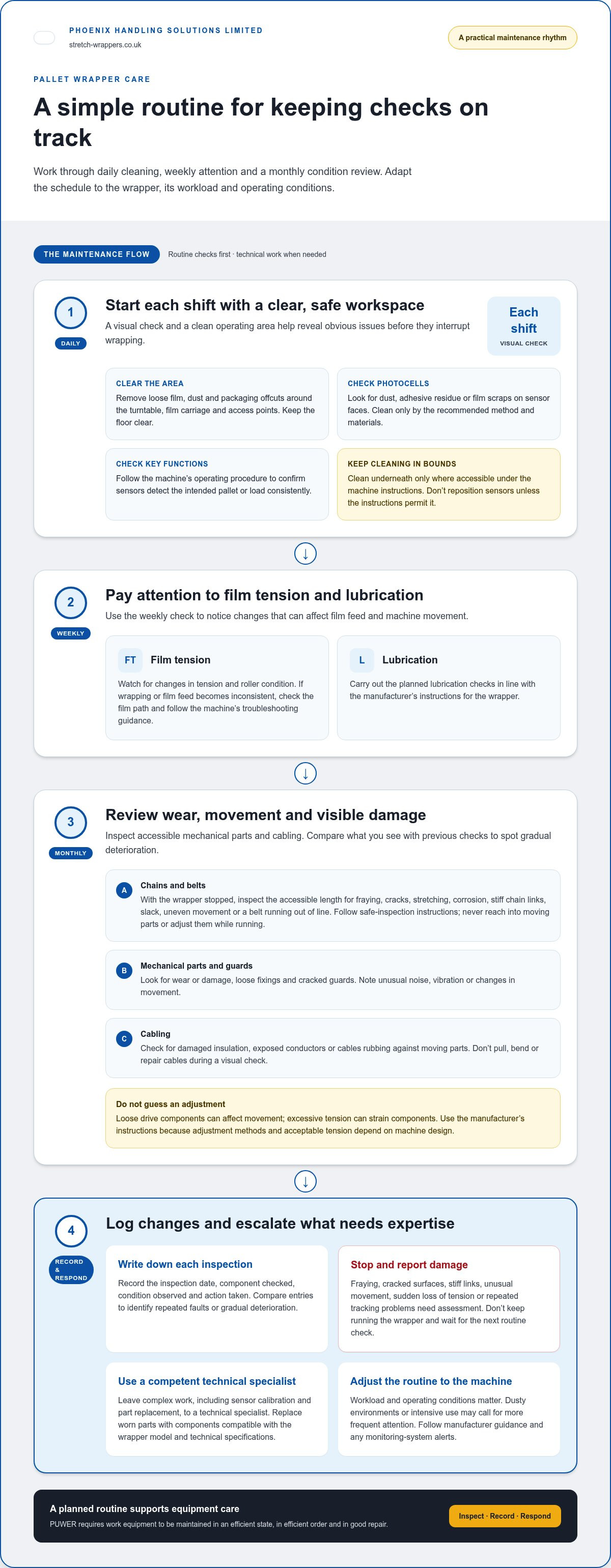
A time-based routine gives operators clear checks and helps maintenance staff plan more detailed inspections. Use the machine manual to match each task to the wrapper’s design, workload and operating conditions. Dust, high temperatures or intensive use may call for more frequent inspections.
For chains, bearings and the turntable, follow the manufacturer’s lubrication points and intervals. Include lubrication in the weekly routine where specified, but don’t assume every component uses the same product or schedule. Check the manual before applying lubricant: too much or the wrong type can attract debris or affect operation.
- Daily: check key functions and clean accessible machine parts. Note unusual sounds, movement or wrapping results.
- Weekly: adjust film tension, inspect rollers for wear and lubricate mechanisms as directed. Check motors and gearboxes for visible wear and lubrication needs.
- Monthly: inspect all components thoroughly and replace worn parts with compatible replacements. Record findings and work completed.
Plan preventive maintenance at least monthly to help reduce breakdown risks and support reliable operation. A specialist can assess complex work, such as sensor calibration or part replacement. Operators should keep routine checks within their competence.
For a wrapper running 24/7, plan more frequent maintenance to account for heavy use. The same applies where heat or dust may increase wear or affect components. Use inspection records to spot recurring issues and adjust the schedule around actual machine use, rather than relying on calendar reminders alone.
Keep the daily, weekly and monthly tasks together in your pallet wrapper maintenance checklist, with space for the date, observations and follow-up actions. This makes missed checks easier to spot and gives technicians a useful record during servicing. If you need support setting up a servicing routine, arrange pallet wrapper servicing to keep planned maintenance moving.
Phoenix Handling Solutions Limited: Rotating turntable stretch wrappers
Phoenix Handling Solutions Limited supplies rotating turntable stretch wrappers and can help you consider machine options alongside your maintenance needs. Its range also includes rotating arm and ring stretch wrappers, so you can discuss which type suits your pallet-handling process.
For new equipment, Phoenix Handling Solutions Limited provides installation, commissioning and training. It also offers servicing and service contracts to help businesses plan support around their machinery and operating requirements. These services can be a practical next step when reviewing maintenance routines, replacing a wrapper or bringing new equipment into the workplace.
To discuss pallet wrapping equipment or servicing, visit stretch-wrappers.co.uk and contact Phoenix Handling Solutions Limited.
Make routine care part of the next shift
A pallet wrapper maintenance checklist is most useful when it’s part of everyday operations. Keep the record with the machine documentation, and make sure the next shift can see which checks are complete and what needs attention. A clear handover helps prevent important observations from being lost between teams.
As equipment or production needs change, review whether the wrapper still suits the work. Phoenix Handling Solutions Limited supplies rotating turntable, rotating arm and ring stretch wrappers, giving businesses different machine types to consider as requirements develop.
If you’re planning an equipment change or want to discuss the right next step for your wrapping operation, contact Phoenix Handling Solutions Limited. A practical conversation can help you move forward with a maintenance approach that suits your equipment and workplace.
Frequently Asked Questions
Who is responsible for maintenance?
Assign responsibilities clearly: operators can complete routine checks, while competent technical staff handle complex maintenance. For example, an operator can record an unusual noise, and a maintenance lead can arrange an assessment and track the follow-up. Keep the machine instructions and maintenance log accessible so everyone understands which tasks they can carry out and which require specialist attention.
What should a daily pallet wrapper maintenance checklist include?
Include a brief pre-use check of the controls, film path, work area and visible condition of accessible parts. Note warning messages, unexpected noises or a load wrapping differently from usual. Record any issue and report it to the person responsible for maintenance before it becomes a recurring fault. A consistent handover note helps the next operator see what needs attention.
What weekly and monthly maintenance tasks does a pallet wrapper need?
Use weekly checks to review moving mechanisms and film handling against the machine’s operating instructions. During the monthly inspection, record component condition and identify signs of deterioration. The right tasks depend on the wrapper model and working conditions, so use its manual to shape the schedule. If production intensity changes, review the maintenance interval rather than sticking with a routine that no longer fits.
How do you safely clean and inspect a pallet wrapping machine?
Follow the manufacturer’s cleaning instructions and your workplace’s safe-isolation procedure before accessing areas near moving parts. Remove loose film and dust from accessible surfaces using the recommended method, then check for visible damage, residue or blocked access points. Don’t remove guards or reach into machinery to clean hidden areas. Refer that work to suitably competent maintenance staff.
How do you check and maintain pallet wrapper film carriage and rollers?
Inspect the film carriage for visible damage, obstructions or scraps that could affect its travel. Check rollers for residue, uneven wear or damage, and note any change in film feed. Follow the machine manual for cleaning and adjustment, including film tension settings. If the carriage moves unevenly or a roller is damaged, record the issue and arrange a competent assessment.
How do you inspect pallet wrapper safety guards, sensors and emergency stops?
Check that guards appear secure and undamaged, and look for obstructions in a sensor’s detection area. Test sensors and emergency stops only by following the manufacturer’s procedure and workplace controls, then confirm the machine responds as instructed. Never bypass an interlock or operate the wrapper with a damaged guard or unreliable stop control. Report faults promptly and keep the machine out of use until it has been assessed.


