

Warehouse efficiency often improves when repeatable pallet wrapping replaces slow, inconsistent hand work. A pallet packaging equipment supplier can help businesses match a wrapping system to their workload, while machine-controlled tension helps use stretch film more consistently and secure loads in a matter of seconds. Powered pre-stretch can also reduce film use by stretching it before application.
This matters when pallets need wrapping throughout a busy shift. Hand wrapping takes time and can strain the operator, while a suitable machine makes the process more consistent. The right choice depends on the loads, available floor space and how much of the wrapping cycle you want to automate.
This guide explains how pallet wrapping equipment can support warehouse efficiency, compares automatic and semi-automatic stretch wrappers, and covers practical considerations for installation, setup and adjustment. It also outlines what to weigh up when choosing a system, so you can judge how it will fit your operation from the first wrapped pallet onwards.
Key Takeaways
- Learn how wrapping equipment can help manage irregular pallet loads and make packing more consistent.
- Compare automatic and semi-automatic systems to see which level of operator involvement suits your workflow.
- Understand the practical steps involved in machine assembly, installation and adjustment for your warehouse.
- Weigh the operational considerations behind buying or leasing equipment, then explore wrapper options and installation support from Phoenix Handling Solutions Limited.
How do packaging machines improve warehouse efficiency?
Packaging machines bring repeatable steps to pallet preparation, from wrapping to carton sealing. The right equipment depends on load shape, packing volume and the warehouse workflow.
Automated wrapping systems
Automatic pallet wrapping can connect with palletising and conveyor systems, reducing manual handling between packing and dispatch. A pallet packaging equipment supplier can help plan how machinery fits into the process. Assess how pallets arrive, where operators work and how wrapped loads leave the area. This makes it easier to judge whether an integrated system suits your operation.
Wrapping challenging and irregular loads
Mixed-height, uneven or fragile pallets need a wrapping cycle suited to their shape. Many pallet wrapping machine models can handle mixed or irregular pallet profiles, including loads with projecting items. Review the pallets your team actually handles and how stable they are before choosing equipment. The aim is consistent containment without relying on one standard load shape.
Stretch film equipment
Stretch wrappers apply film with controlled tension, while powered pre-stretch equipment stretches film before application. This can reduce film use and long-term packing costs compared with hand wrapping. Shrink wrappers and sealers handle different tasks, such as enclosing products or sealing cartons. Compare equipment against the packaging task, rather than treating every machine as interchangeable.
Film reduction is practical to measure: record the amount used per pallet, then compare it with load security after process adjustments. A metal packaging manufacturer reduced stretch-film consumption by 64%, illustrating the potential value of reviewing film use alongside containment.
Running costs and maintenance
Running costs depend on film consumption, power use, throughput and servicing needs. Pallet wrapping machines generally need regular cleaning and basic checks. HSE lists BSEN 415-6:2006 as a safety standard for pallet wrapping machines. Old pre-CEN machines, typically made before 2000–2005, are subject to PUWER 1998.
UK buyers can look for used or refurbished machinery through packaging equipment suppliers. A pallet packaging equipment supplier can help identify suitable equipment; compare its condition, maintenance history and fit for your loads.
Automatic and semi-automatic stretch wrapping equipment
Choose automation according to pallet volume, operator involvement and how loads move through your warehouse. Semi-automatic and fully automatic systems suit different processes, from standalone wrapping to integrated operations.
Wrapping palletised and unpalletised goods
For palletised goods, a semi-automatic wrapper typically requires an operator to position the load and start the cycle. Fully automatic equipment can form part of a line, linking wrapping with conveyors or other packaging machinery. For unpalletised goods, assess the product and pack format first. A carton or individual product may need a different wrapping or shrink process from a completed pallet.
Manual dispensers can suit low wrapping volumes or highly variable loads. An adjustable resistance brake can help maintain film tension during hand application. Semi-automatic machines reduce repeated manual wrapping, while automatic systems can move loads through a planned cycle with less operator handling. Compare the steps each option removes, not just its headline speed.
Bespoke turnkey wrapping solutions
A complete packaging solution brings equipment together with the process it serves. Start by mapping how goods arrive, where operators work and how wrapped pallets leave. Then consider access, floor space and connections with existing equipment. A practical system should account for the carton or pallet formats handled, as well as changes between products or shifts.
Automatic rotary ring stretch wrappers are one option for an integrated line. Their ring-based wrapping arrangement differs from a turntable, where the pallet rotates during wrapping. Compare each layout against load movement, available space and how the machine will fit surrounding operations. Most turntable and semi-automatic pallet wrapping machines require only a small floor area for installation.
Before selecting equipment, note your typical pallet formats, packaging volume and current manual steps. This gives a stretch wrapper range a useful context for comparison, including the level of automation and integration each operation needs.
Equipment assembly, installation and adjustment
Installation brings the selected machine into the packing area and prepares it for daily use. Assembly, commissioning and adjustment should suit the pallet wrap, available space and surrounding automated packaging equipment.
Assembly and equipment setup
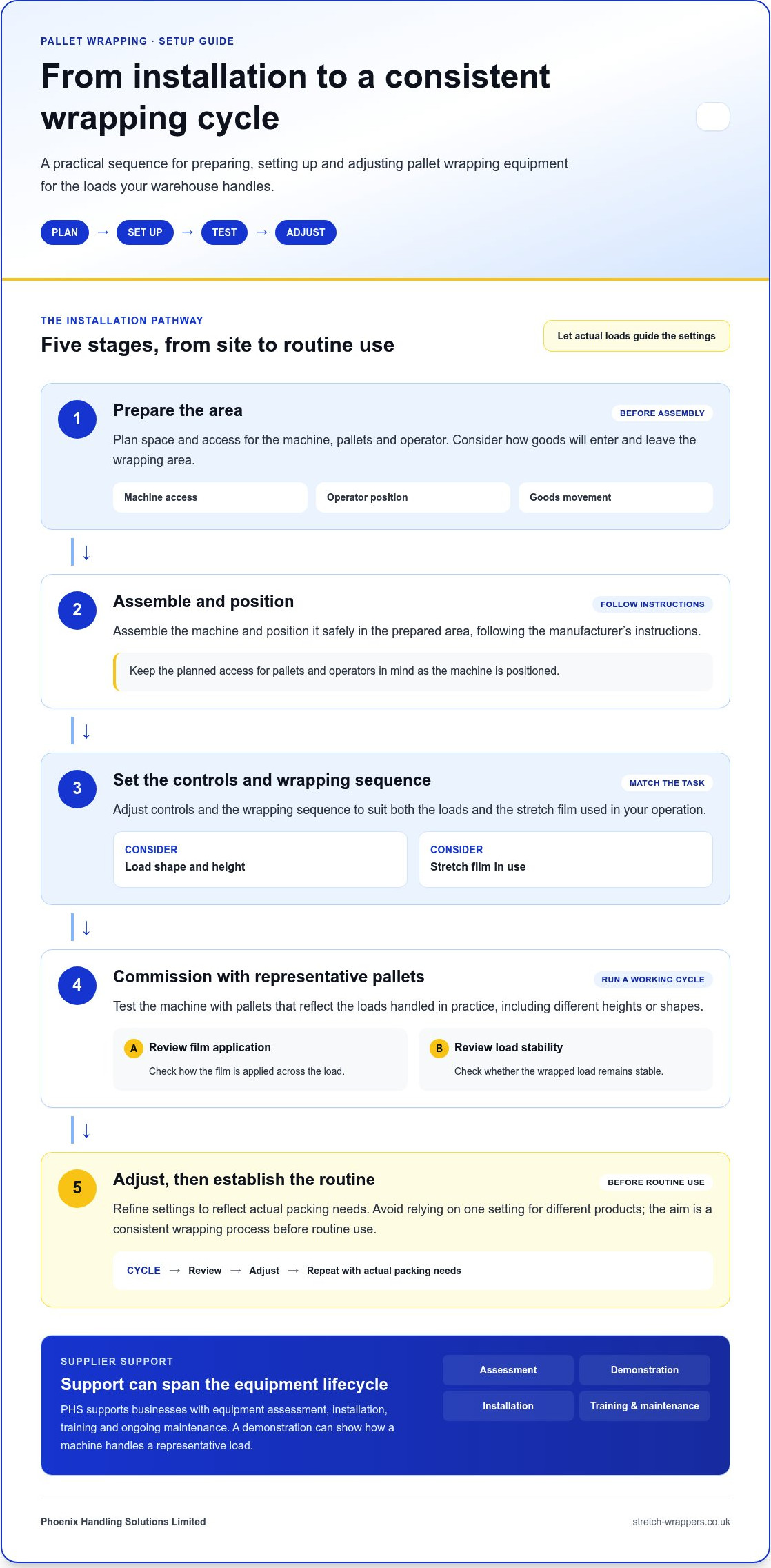
Start by preparing the installation area: allow access for the machine, pallets and operator, and consider how goods enter and leave. Follow the manufacturer’s instructions for assembly and safe positioning. During setup, adjust the controls and wrapping sequence to suit the loads and stretch film used in your operation.
Commissioning checks the machine through a working cycle. Run representative pallets, including different heights or shapes, and review film application and load stability. Adjust settings to reflect actual packing needs, rather than relying on one setting for different products. This helps establish a consistent wrapping process before routine use.
Supplier trials and training
PHS supports businesses through equipment assessment, installation, training and ongoing maintenance. A demonstration can show how a machine handles a representative load; installation and commissioning prepare it for your site, while training covers operation and routine checks.
Training should use the controls and pallet formats operators will encounter, such as standard and irregular loads. Clear instruction helps staff follow the wrapping sequence and recognise when adjustments are needed. Plan maintenance around the equipment and its expected use, including servicing and access to spare parts.
For an efficient handover, record the agreed settings, operating steps and maintenance tasks in one place. Include film threading, cycle selection and what to do when a pallet changes format. If the site also uses bagging or other packaging machinery, map how each task connects so operators can move loads through the packing area without unnecessary handling.
Installation planning should also account for the people who will run the machine. Set out who receives training, who performs routine checks and how faults are reported. For example, a shift handover can include the selected wrapping programme and any load-specific adjustment, helping the next operator work consistently.
Should a business buy or lease pallet packaging equipment?
Buying or leasing depends on how regularly the machine will be used, how long it needs to serve the operation and how the business manages expenditure. Compare the overall commitment with the warehouse’s packing needs, rather than deciding on the initial payment alone.
Buying can suit a business with steady pallet volumes and a long-term need for the same wrapping process. Ownership gives the operation a machine to use and maintain, while the buyer plans for installation, operator training, servicing and spare parts. For example, a warehouse wrapping similar loads each shift can assess whether a dedicated pallet wrapper fits its ongoing workflow.
Leasing may appeal when a business wants to spread expenditure or expects requirements to change. Before deciding, compare the agreement term, payment schedule, maintenance responsibilities and end-of-term arrangements. For a seasonal operation, access during peak demand may have different value from a site wrapping pallets at a consistent rate throughout the year. Leasing terms vary, so review the agreement carefully.
Compare both routes against the same practical measures: expected pallet volume, operator time, film use, available floor space and support needs. Include installation and commissioning in the assessment, alongside servicing and operator training. A machine that does not suit your pallet formats or workflow can disrupt operations, regardless of how it is funded.
Equipment cost depends on machine type, configuration, installation needs and service requirements, and is provided after a quote request. For a purchase decision, set out the loads to be wrapped, the operating pattern and the required level of automation. Then assess whether ownership matches the business’s plans, or whether a leasing agreement’s terms better fit its cash-flow priorities.
For businesses ready to purchase a wrapper, compare stretch wrapper options against those operational requirements and consider how the chosen equipment will fit the packing area.
Phoenix Handling Solutions Limited: Rotating turntable stretch wrappers
Phoenix Handling Solutions Limited supplies rotating turntable stretch wrappers for businesses wrapping pallet loads as part of their warehouse operation. A turntable machine may suit loads that can rotate during wrapping, while rotating arm and ring wrappers provide alternative configurations for different workflows.
Choosing between these machines involves considering how pallets are presented, the load profile and how wrapping fits into the packing area. Phoenix Handling Solutions Limited also provides installation, commissioning and training, preparing the selected equipment for operation and familiarising operators with its use.
If you’re assessing wrapper options or planning an installation, visit stretch-wrappers.co.uk or contact Phoenix Handling Solutions Limited to discuss your requirements.
Plan your next step with confidence
Turn your warehouse requirements into a practical equipment brief. Note the pallet formats you handle, the space available and how wrapping fits into your dispatch routine. This gives a pallet packaging equipment supplier a clear basis for discussing machine suitability and installation needs.
Phoenix Handling Solutions Limited supplies rotating turntable, rotating arm and ring stretch wrappers, with installation, commissioning and training to support their introduction into your operation. If you’re comparing wrapper configurations, discuss your loads and workflow with the team to focus on what matters in your packing area.
Contact Phoenix Handling Solutions Limited to discuss your warehouse requirements and explore a suitable next step. A considered choice can help your team build a wrapping process that fits the work ahead.
Frequently Asked Questions
What types of packaging equipment do you offer?
Phoenix Handling Solutions Limited offers pallet wrapping and end-of-line packaging equipment, including rotating turntable, rotating arm and ring stretch wrappers. The range also includes strapping machines, shrink wrappers and stretch hooders. For businesses planning a new installation, support includes installation, commissioning and operator training. Machine servicing, service contracts and spare parts are also available, helping businesses plan for equipment care after installation.
What types of packaging machinery are available?
Packaging machinery covers different stages of preparing goods for storage or transport. Examples include pallet wrappers for securing loads, strapping machines for applying straps, shrink wrappers for packaging products, and stretch hooders for covering pallet loads. The right category depends on the product and task: a warehouse securing completed pallets needs different equipment from a production line wrapping individual products.
What types of pallet packaging equipment are available in the UK?
UK businesses can choose from pallet wrapping formats such as rotating turntable, rotating arm and ring machines. Other pallet packaging options include strapping machines and stretch hooders, which provide different forms of load containment. Consider how pallets are presented to the machine and how the packaged load moves afterwards. This helps narrow down the equipment to suit the handling process already in place.
Which UK suppliers sell pallet wrappers, strapping machines, and stretch hood equipment?
Phoenix Handling Solutions Limited supplies pallet wrappers, strapping machines and stretch hooders across the UK. Its wrapper range includes rotating turntable, rotating arm and ring machines. The company’s engineers cover the whole of the UK and Ireland, supporting businesses with equipment needs, including installation and operator training.
How do leading UK pallet packaging equipment suppliers compare on features and service?
Compare suppliers by machine format, equipment range and the support available after purchase. Phoenix Handling Solutions Limited supplies Tosa wrapping machines, with more than 300 machines in the UK alone available for on-site demonstration. Its support includes installation, commissioning, training, servicing, service contracts and spare parts. These details help buyers compare the equipment itself with the practical support needed to operate it.
What throughput and load specifications should buyers consider when choosing pallet packaging equipment?
Start with the number and variety of pallets your operation needs to process, then consider load height, footprint, weight and stability. Include unusual loads, such as mixed cartons or products projecting beyond the pallet edge. Next, map the available space and how pallets enter and leave the wrapping point. These details help match the machine format and wrapping process to your actual warehouse work.


