

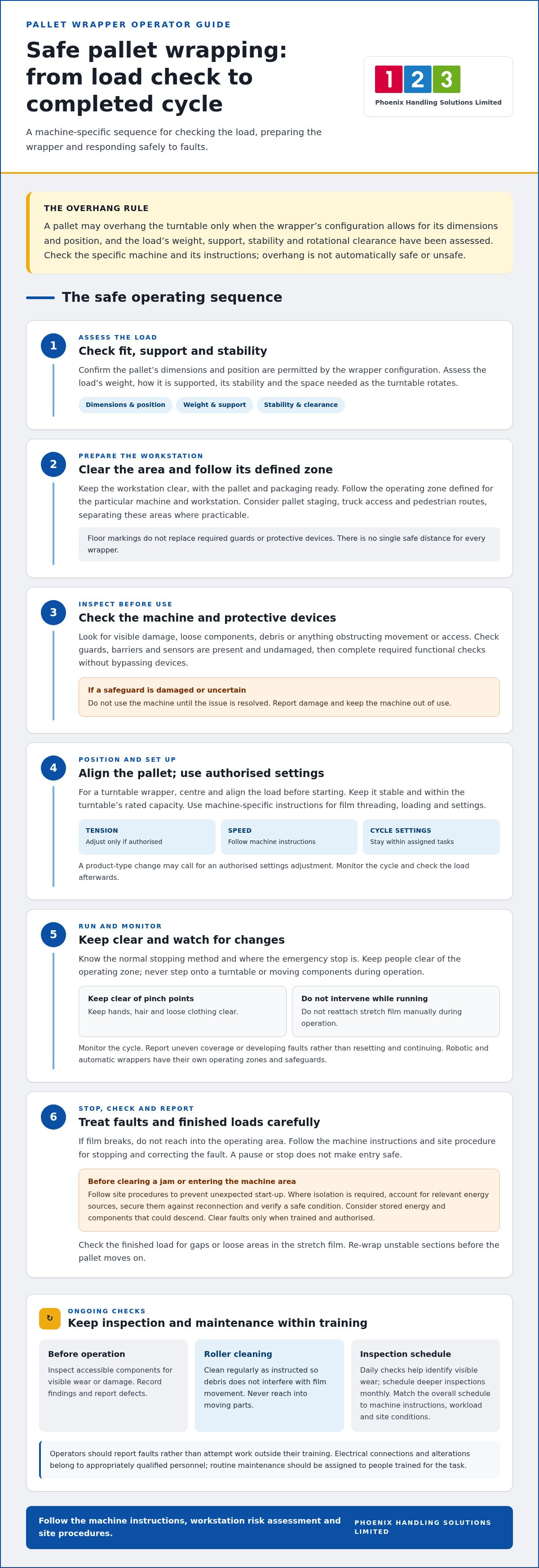
A pallet may overhang a turntable only if the wrapper’s configuration allows for its dimensions and position, and the load’s weight, support, stability and rotation clearance have been assessed. Pallet wrapper operator training should teach staff to check each load against the specific machine and its operating instructions, rather than assume overhang is always safe or unsafe.
It’s understandable to focus on whether the pallet fits, but safe wrapping also depends on how the load is supported and how it moves as the turntable rotates. A poorly positioned or unstable load can cause problems during the cycle.
This guide explains what operators should check before starting, how to handle common situations and which safeguards and procedures matter. It also shows how practical training helps staff operate the machine correctly, recognise developing faults and know when a task is beyond their authority.
Key Takeaways
- Assess an overhanging pallet against the machine’s permitted configuration, load stability and rotational space before wrapping.
- Check guards and protective devices before use, and keep people clear of the machine’s defined operating zone.
- Use the machine’s instructions and site procedures to guide load positioning, film handling and responses to faults.
- Practical training helps operators learn correct settings, recognise developing faults and understand which tasks they’re authorised to carry out.
Machine guarding, barriers, sensors, and emergency stops
In the UK, operators should follow the machine instructions, workstation risk assessment and site procedures. Pallet wrapper operator training should cover safeguards, controls and the tasks each person is authorised to perform.
Machine-specific safeguards and risk assessment
Safeguards depend on the wrapper’s design, configuration, instructions and workstation risk assessment. Operators should learn how its guards, barriers and sensors protect access points, then complete required functional checks without bypassing devices. Test emergency stops regularly and understand how the machine responds when one is pressed. A pause or stop doesn’t make entry safe. If a safeguard is damaged or uncertain, don’t use the machine until the issue is resolved.
Installation and safe operating zones
Installation and commissioning establish the machine’s position, access routes and operating zone in the workplace. Assess the layout around pallet staging, truck access and pedestrian routes, separating these areas where practicable. Floor markings don’t replace required guards or protective devices. There’s no single safe distance for every wrapper, so operators must follow the zone defined for their machine and workstation.
An emergency stop halts movement, but it doesn’t replace preparation and energy isolation before repairs. Before clearing a jam or entering the machine area, follow site procedures to prevent unexpected start-up. Where isolation is required, account for relevant energy sources, secure them against reconnection and verify a safe condition. Also consider stored energy and components that could descend.
Good pallet wrapper operator training also covers film threading and loading, strap handling where relevant, and machine-specific settings. Operators should understand which controls they’re authorised to adjust, such as tension, speed and cycle settings, and when to report a fault instead. For example, a change in product type may call for an authorised settings adjustment, followed by monitoring the cycle and checking the load.
Pallet wrapper safety checklist and common mistakes
Before use, inspect the machine for wear or damage, check its protective devices and complete the required functional checks. Clean rollers as instructed, record inspection findings and leave maintenance tasks to people trained to do them safely.
Pre-start checks and workstation readiness
Use a written checklist based on the machine instructions and site procedures. Before each shift, look for visible damage, loose components, debris and anything obstructing the machine’s movement or access. Check that protective devices are present and undamaged, then complete required functional checks without bypassing safeguards. Keep the workstation clear, with the pallet and packaging ready. If a check identifies damage, report it and keep the machine out of use until the issue is resolved.
Cleaning rollers and checking machine wear
Clean rollers regularly so debris doesn’t build up and interfere with film movement. Follow the machine’s instructions for cleaning, and don’t reach into moving parts. Inspect accessible components for wear or damage before operation, then report defects rather than attempting work outside your training. Replace damaged parts through an authorised maintenance process. Daily checks help identify visible wear; deeper inspections should be scheduled monthly, while the overall schedule should reflect the machine instructions, workload and site conditions.
A practical checklist should distinguish operator checks from maintenance work. For example, an operator can note a damaged roller or unusual film tracking and report it through the site’s fault procedure. Electrical connections and alterations belong to appropriately qualified personnel, while routine maintenance should be assigned to people trained for the task. Recording findings helps the team identify recurring issues and share clear information between shifts.
Check the finished load as well as the machine: look for gaps or loose areas in the stretch film, and re-wrap unstable sections before the pallet moves on. If the film breaks during a cycle, don’t reach into the operating area to fix it; follow the machine instructions and site procedure for stopping and correcting the fault. A suitable stretch wrapper should also be operated and maintained according to its specific instructions.
Safe operation of turntable, robotic and automatic wrappers
Safe operating procedures should match the wrapper’s design and the operator’s assigned tasks. Training should cover normal cycles, responses to faults and when to stop.
Operating turntable, robotic and automatic wrappers
On a turntable wrapper, centre and align each load before starting. Keep it stable and within the turntable’s rated capacity. Never step onto the turntable or moving components during operation. Robotic and automatic machines move differently, so learn their specific operating zones and safeguards. Keep hands, hair and loose clothing clear of pinch points. Don’t reattach stretch film manually while the wrapper is running. Monitor the cycle, and report uneven coverage or developing faults rather than resetting and continuing.
Stopping safely and clearing jams
Before starting a cycle, learn the normal stopping method and where to find the emergency stop. A pause or stop doesn’t make it safe to enter. Before clearing a jam or entering the machine area, follow site procedures to prevent unexpected start-up. Where isolation is required, account for energy sources, secure them against reconnection and verify a safe condition. Consider stored energy and components that could descend. Operators should clear faults only when trained and authorised to do so.
Training routes and operator qualifications
In-house training can use the actual machine, site procedures and typical loads. Accredited training follows an external accreditation route, while practical instruction can focus on the equipment operators use. Operators need suitable training for safe operation, but that doesn’t mean every site needs one universal accredited course. Instruction should cover machine controls, stopping methods, fault reporting and authorised tasks. The essential qualification is being trained and competent for assigned duties; a certificate alone doesn’t demonstrate familiarity with a particular wrapper.
Refresher training and course duration
There’s no universal refresher interval for every wrapper. Arrange refresher instruction when equipment, settings or procedures change, or when faults indicate that operators need support. Review safe practices after an incident or a change in assigned duties. Training duration also varies with machine design, operator experience and the tasks covered. Allow time for explanation and supervised practice, including normal cycles and fault reporting. Operators should demonstrate that they can follow the instructions before working independently.
Pallet wrapper operation and training guides
A useful operating guide turns the machine instructions into repeatable steps for everyday loads. It should show operators how to prepare a pallet, select the correct cycle, check coverage and respond if the result is uneven.
Start with the load, not the control panel. A guide should demonstrate how to stack goods evenly on a stable pallet, with balanced weight and no overhanging edges. Then explain how to choose settings for the load’s size, weight and containment needs, using a familiar product as the training example.
- Prepare the load: Check that the pallet is sound and goods are stable before wrapping.
- Set the film: Follow the machine’s loading procedure and check film compatibility with its thickness and roll-size specifications.
- Apply the wrap: Training guidance commonly recommends securing the pallet base with two to three wraps and overlapping layers by about 50%.
- Watch the cycle: Check that stretch film stays taut without being overstretched, and that the load receives even coverage.
- Assess the result: Look for gaps or loose areas, then re-wrap unstable sections before moving the pallet.
These steps help operators understand how settings affect the finished load, rather than relying on one cycle for every product. If film breaks, coverage changes or a fault develops, they should follow the machine instructions and report the issue, not reset and continue without understanding the cause. A training guide can record suitable settings for familiar products and make handovers clearer.
Pre-stretch film technology can reduce material use by up to 30% per pallet. Training should explain how the machine’s film system works and how operators can achieve the required load containment without excessive tension. The practical takeaway is simple: follow a repeatable procedure, then assess the wrapped load before it leaves the workstation.
Review stretch-wrapper options alongside your operating requirements to match equipment and procedures to the loads being wrapped.
Phoenix Handling Solutions Limited: Rotating turntable stretch wrappers
Phoenix Handling Solutions Limited supplies rotating turntable stretch wrappers and provides installation, commissioning and training. This helps businesses bring equipment into operation with staff familiar with its controls and procedures. Training is especially useful when a new machine is installed or operators need practical instruction on the wrapper they use.
If a turntable design doesn’t suit the load or wrapping process, Phoenix also supplies rotating arm and ring stretch wrappers. The right equipment depends on the application and how pallets move through the workplace. Training should reflect the selected machine and its operating requirements.
For support with equipment selection, installation or operator training, visit stretch-wrappers.co.uk.
Build safe habits into your next operating shift
Make training part of bringing a machine into everyday use, rather than treating it as a one-off introduction. Reviewing operator tasks, site procedures and the loads being wrapped helps keep instruction relevant as products or workflows change. Ensure everyone using the equipment understands their role and knows when to stop and report a fault.
For businesses considering equipment alongside staff instruction, Phoenix Handling Solutions Limited supplies rotating turntable, rotating arm and ring stretch wrappers. Its installation, commissioning and training help operators become familiar with the machinery selected for their operation. Start by considering your loads, work area and wrapping process together.
If you’re planning pallet wrapper operator training or reviewing your wrapping equipment, contact Phoenix Handling Solutions Limited to discuss a suitable next step. With clear priorities in place, your team can move forward with confidence.
Frequently Asked Questions
Can you wrap a pallet that overhangs the turntable?
Yes, if the wrapper configuration permits the pallet’s dimensions and position, and the load is stable and properly supported. Compare the pallet’s overhang with the turntable’s rotational clearance before loading it. Consider the load’s weight and balance as it turns, not just whether it fits at rest. If any part could strike the machine or destabilise the pallet, don’t start the cycle.
How far should you stay from a running wrapper?
There isn’t one safe distance in metres for every running wrapper. Stay outside the operating zone defined for that machine and workstation, following its instructions and the site risk assessment. A rotating turntable, robotic arm and automatic wrapper can each have different movement areas. Barriers and sensors help control access, but floor markings alone don’t protect operators from moving parts.
What are the steps for operating a pallet stretch wrapper safely?
Follow the sequence in the machine instructions and your site procedure. First, confirm you’re authorised to operate the wrapper and identify its controls. Prepare a stable, correctly positioned load, then start the cycle from the designated control point. Stay clear of moving components and watch for unusual movement, film breaks or load shifting. Stop and report a developing fault instead of attempting an unapproved adjustment.
What risks and common accidents are associated with pallet wrapping machines?
Common hazards include hands or clothing getting caught at pinch points, contact with moving parts and unstable loads shifting during rotation. Entering the machine area after a pause can also expose workers to unexpected start-up. Keep loose clothing and hair clear, never step onto a moving turntable, and follow the site procedure for clearing jams. If safeguards are damaged or their operation is uncertain, stop using the machine until the issue is resolved.
Is pallet wrapper operator training mandatory in the UK?
Operators need suitable training to work safely and be competent for their assigned duties. There isn’t a universal requirement for every operator to complete an accredited course.


