

The final hand-off can shape how smoothly finished goods leave your production line. End-of-line packaging machinery supports the final hand-off of goods from a production line and can include case forming and sealing, product packing, stretch wrapping and pallet unitisation.
It’s understandable to focus on the machinery itself, but the right end-of-line packaging machinery setup also depends on your products, packaging requirements, available floor space and the pace of upstream processes. This guide explains what end-of-line packaging includes, how different machines fit into a line, and what to consider when planning an investment.
You’ll also find practical guidance on integration, breakdowns, maintenance and operator training, so you can assess how equipment will perform after installation and in day-to-day use. Whether you’re considering a standalone machine or a connected line, the aim is to identify the functions that matter and the questions that will shape a sound decision.
Key Takeaways
- Match equipment to the product, required throughput and available floor space to build a practical end-of-line setup.
- Understand how connected components affect the line, so you can identify where a stoppage may interrupt production and plan a response.
- Assess investment, integration, maintenance and operator training together when deciding how to introduce automation.
- Compare stretch-wrapping options by how loads are presented and handled, then consider installation, commissioning and training as part of implementation.
What Is End-Of-Line Packaging?
End-of-line packaging covers the final 30% of a production line, where products are prepared for dispatch. It can include case forming, sealing, product packing and pallet unitisation.
The right setup depends on the product, required throughput and available space, not on a single standard layout.
Product, Throughput and Space Customisation
Start by noting the product’s dimensions, weight and packaging requirements, then consider how quickly finished goods need to move. A conveyor can connect packing and palletising stages, but its route must also allow room for operators, access and load handling.
For example, a line handling heavy or irregular loads may need a different unitisation method from one packing uniform cartons. Match equipment and layout to the actual production flow, including the points where products accumulate between stages.
Specialised or customised packaging machinery can suit product shapes and packaging tasks that standard equipment cannot handle effectively. Depending on the application, a line may combine case forming, sealing and pallet preparation, with each stage selected for the product and its route through the line.
Customised end-of-line packaging machinery can also be introduced in stages. A standalone machine can first handle one repetitive task, with further equipment added as throughput or packaging requirements change. This helps define each machine’s role before connecting the full line.
Integration matters because conveyors, packing stations and palletising equipment need to transfer products between stages at a workable pace. Robotic and customised solutions can support repetitive handling, while a fully automatic arrangement may coordinate several steps. Plan the product flow, operator access and transfer points between machines.
Safety Standards and Regulations
In the UK, consider applicable machinery product-safety requirements alongside workplace health and safety duties. The relevant standards depend on the machine’s design, functions and installation, so assess the equipment in relation to its intended use.
Include guarding, access points, moving conveyors and maintenance isolation in the risk assessment. For an integrated line, consider how the machines affect one another, including where operators clear jams or load materials. Plan safe access and clear operating procedures as part of the layout, rather than adding them after installation.
What happens if the automated equipment breaks down?
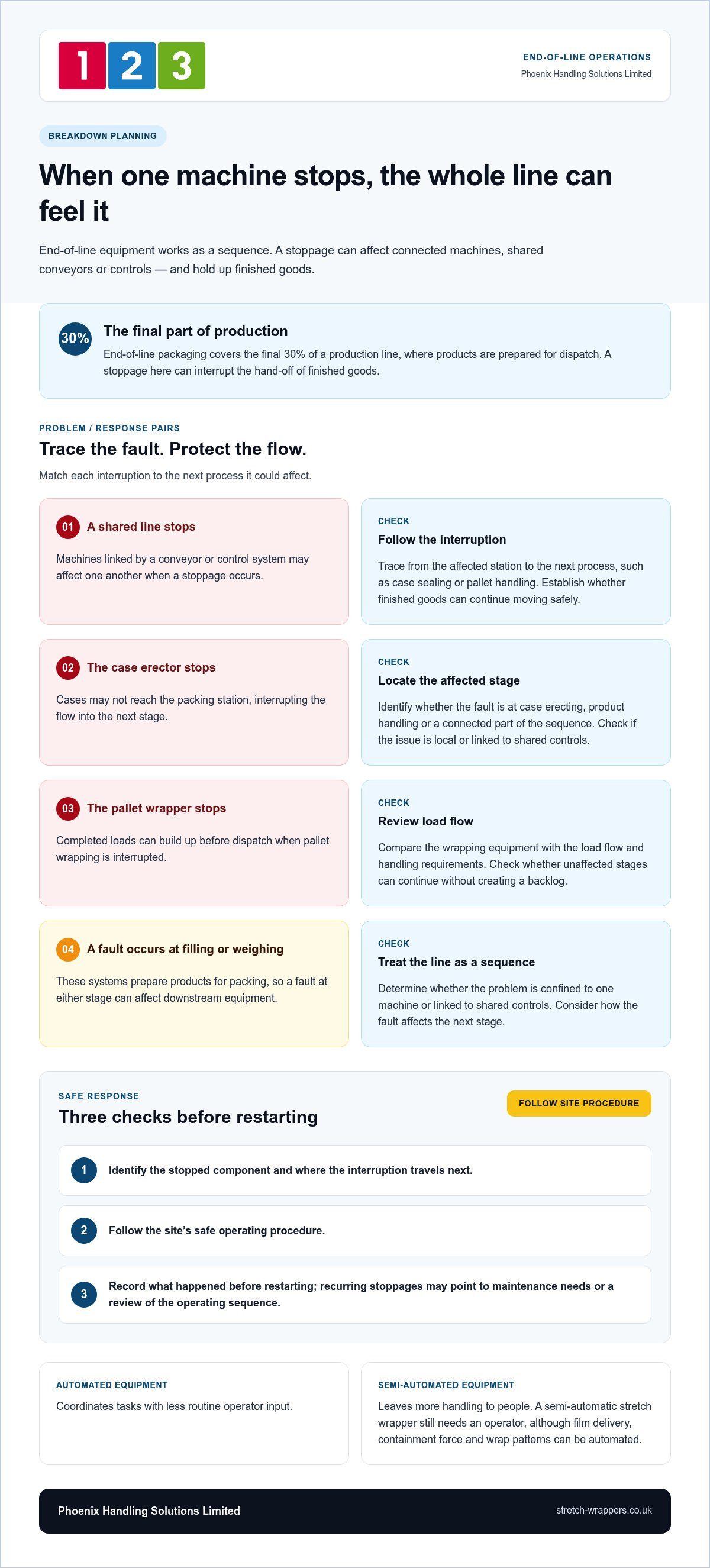
A stoppage can affect several machines when they share a conveyor or control system. Trace the interruption from the affected station to the next process, such as case sealing or pallet handling, and determine whether finished goods can continue moving safely.
Automated systems coordinate tasks with less routine operator input, while semi-automated equipment leaves more handling to people. A semi-automatic stretch wrapper, for example, still needs an operator, although film delivery, containment force and wrap patterns can be automated. Choose equipment to suit the operation’s pace, product flow and staffing needs.
End-of-line equipment may include case erecting, filling, weighing, sealing, conveying and palletising components. If a case erector stops, cases may not reach the packing station; if a pallet wrapper stops, completed loads can build up before dispatch. Understanding each machine’s place in the sequence helps pinpoint where a fault interrupts flow.
Weighing and filling systems prepare products for packing, while robotic palletising systems arrange finished cases on a pallet. A fault at either stage can affect downstream equipment, so establish whether the issue is local or linked to shared controls. Treat packaging automation as a sequence, not just a collection of separate machines.
For a practical response, identify the stopped component, follow the site’s safe operating procedure and record what happened before restarting. Check whether the fault affects case erecting, product handling or pallet wrapping, and whether unaffected stages can continue without creating a backlog. Recurring stoppages may point to a need for maintenance or a review of the system’s operating sequence. For lines using stretch wrapping, compare pallet wrapping equipment with the load flow and handling requirements.
Investment, integration, maintenance and training considerations
Automation can reduce repetitive manual handling and support steadier output, but operators still oversee quality and handle exceptions. Faults, poor integration and equipment that does not suit the production line can all disrupt operations.
Manufacturers may see a return on investment from end-of-line automation within 6-18 months. The calculation depends on output, labour, downtime, maintenance and packaging requirements. Compare the expected operating benefits with installation and ongoing support needs, rather than assessing purchase cost alone.
Start integration by mapping how each station prepares products for the next. Case packing, sealing and stretch wrapping need to match the line’s pace and product flow. A central control system can coordinate connected components, helping production run as one sequence rather than as separate processes.
Integration can also create technical challenges. Different equipment may have separate controls, transfer points or operating procedures, causing delays between production stages. Plan how products move between machines, where they queue and how staff can access equipment for routine tasks. A staged installation can introduce automation without changing every process at once.
A maintenance plan should cover wear points, fault reporting, safe access and the response needed when a machine stops. For example, a fault at a wrapping station can hold finished pallets upstream. Keep service records and train operators to recognise faults, follow site procedures and avoid repairs beyond their training.
When assessing used machinery in the UK, review its condition, operating history and compatibility with your products, line layout and controls. Inspect guarding and moving parts, check manuals and service records, and establish whether spares and technical support are available. A machine that works on its own may still need changes to integrate reliably.
Commissioning and operator training should cover the installed process, not just individual controls. Staff need to understand start-up, normal operation, safe shutdown and what to do when case packing or wrapping stops. Practical training helps operators recognise exceptions and report faults clearly.
End-of-line packaging machinery range
End-of-line equipment follows the product’s journey from packing to dispatch. It can include case forming, product collation, case sealing, stretch wrapping and pallet unitisation. Each machine handles a defined task, while conveyors connect stages and move products or completed loads between them.
For example, a case erector forms cartons before they reach a packing station. A case sealer closes the cartons, and labelling equipment can prepare them for identification. At the pallet end of the line, wrapping or strapping secures grouped goods for transport; the choice depends on the load and packaging requirements.
Automatic and semi-automatic equipment differ in how much operator involvement each task needs. A fully automatic carton sealer can complete in five minutes a task that would take one person 30 minutes. That comparison shows how automation can change packing time, although integration with the surrounding line remains important.
Stretch wrappers secure loads for movement and storage, while strapping machines apply straps around grouped products or pallets. Semi-automatic stretch wrappers still require an operator, but can automate film delivery, containment force and wrap patterns. The appropriate equipment depends on how loads arrive at and leave each station.
- Case forming and sealing: prepares cartons for packing and dispatch.
- Product collation: groups items before they enter cases.
- Stretch wrapping: contains pallet loads for transport.
- Strapping: secures grouped products or completed pallets.
UK suppliers include packaging machinery manufacturers and specialist suppliers offering equipment for individual tasks or integrated lines. Compare machinery by its role, the operator input it requires and how it connects to adjacent production stages, rather than treating each machine as a complete packaging solution.
To explore equipment for securing pallet loads, compare stretch-wrapping options against your product flow and handling needs.
Phoenix Handling Solutions Limited: Rotating turntable stretch wrappers
Phoenix Handling Solutions Limited supplies pallet-wrapping equipment to suit load handling and production-line layouts. Its range includes rotating turntable, rotating arm and ring stretch wrappers, with installation, commissioning and training to support implementation.
A rotating turntable wrapper suits loads that can be positioned on a turntable; rotating arm and ring designs offer alternative ways to apply stretch film. The right choice depends on how pallets reach the wrapping point and how wrapped loads return to the dispatch flow.
If you’re planning a new wrapping station or reviewing an existing line, consider the load format, equipment position and operator workflow together. You’re welcome to visit stretch-wrappers.co.uk to discuss your requirements.
Plan the next step for your production line
Before choosing end-of-line packaging machinery, turn your layout into a practical decision brief. Note the product and pallet formats, where loads enter and leave the wrapping area, and how operators move around the equipment. This gives you a sound basis for comparing solutions against actual production needs, rather than selecting a machine in isolation.
Phoenix Handling Solutions Limited supplies rotating turntable, rotating arm and ring stretch wrappers, and provides installation, commissioning and training. The best fit depends on how pallets are presented and how wrapping connects to the rest of your line, so consider these factors together when planning your next investment.
If you’re ready to discuss a wrapping requirement, share the production-line layout and load-handling details that will shape the decision. Contact Phoenix Handling Solutions Limited to talk through the available options and take a considered next step for your operation.
Frequently Asked Questions
Can EOL automation handle different product sizes and types?
Yes. End-of-line equipment can be configured for different products and packaging requirements. A line handling small cartons, for example, may need different guides and settings from one handling bulky cases or mixed formats. Consider the product range, packaging changes and load types the equipment must manage, then assess whether changeovers fit the operation’s routine.
How long does it take to see return on investment (ROI) from EOL automation?
Manufacturers may see a return on investment from end-of-line automation within 6-18 months. The actual payback depends on factors such as production volume, labour use, downtime, maintenance and the equipment selected. To assess a proposed project, compare its purchase and operating costs with the value of time saved, steadier output and reduced manual handling.
Is EOL automation only for large manufacturers?
No. Smaller operations can start with a standalone or semi-automatic machine and expand as requirements change. For example, a business could automate pallet wrapping first, then add connected equipment if volumes or product-handling needs grow. Starting with a clear, repetitive task keeps the first stage focused and makes it easier to assess whether further automation is suitable.
What is End-of-Line Automation?
End-of-line automation uses machinery and controls to carry out tasks near the end of production, preparing finished goods for storage or dispatch. It operates in the final 30% of a production line and can connect activities such as packing, sealing and pallet preparation. Operators remain important for oversight, quality checks and handling exceptions during the process.
What is end-of-line packaging machinery and what equipment does it include?
End-of-line packaging machinery prepares products and loads for dispatch after manufacturing. Depending on the line, it can include case erectors, case sealers, packing equipment, conveyors, palletisers, stretch wrappers and strapping machines. The right combination depends on the product’s packaging, how loads move through the facility and which tasks currently cause delays.
What are the main types of end-of-line packaging machines?
Main types include case erectors, which form cartons; case sealers, which close them; and packing systems, which place products into cases. Palletisers arrange cases on pallets, while stretch wrappers and strapping machines secure loads for handling and transport. Shrink wrappers and stretch hooders offer other ways to package products or pallet loads, depending on the process.

