

For a high-throughput production line, a rotating-ring wrapper can keep pallet wrapping moving at pace. A pallet wrapper for a production line automates the application of stretch film to loaded pallets; fully automatic systems can detect the load, wrap it and cut the film, while rotating-ring models can wrap more than 75 pallets per hour with two film carriages.
It’s understandable to focus on how quickly pallets can be wrapped, but the right system must also secure different loads consistently and fit the line’s material flow. This guide explains how automated wrapping works, when a rotating ring may suit a production line, and what to consider when comparing it with turntable and rotating-arm systems.
You’ll also learn how conveyors connect a wrapper to the rest of the line, which load and site factors shape installation, and what commissioning and operator training involve. This should help you assess whether automation suits your throughput and handling needs, and identify practical next steps.
Key Takeaways
- Set film tension and wrapping settings around each load’s size, weight and containment needs to balance secure wrapping with avoiding film tears.
- Assess your line’s throughput and pallet flow to decide whether conveyor-fed automatic wrapping is a practical fit.
- Prepare stable, evenly stacked loads with no overhanging edges to help reduce movement during storage and transit.
- Compare rotating-ring, turntable and rotating-arm systems against your load type and line layout to identify the most suitable wrapping method.
What is Automated Pallet Wrapping?
An automatic pallet wrapping cycle detects a loaded pallet, applies stretch film, then cuts and seals it. On a production line, the wrapper can sit beside a conveyor, connecting load handling with the end-of-line process.
Film tension and wrapping settings
Set film tension and wrapping settings to suit each load’s size, weight and containment needs. Too much tension can tear the film, while too little may leave the pallet less secure. Check how the film sits around corners and whether the load shifts during wrapping.
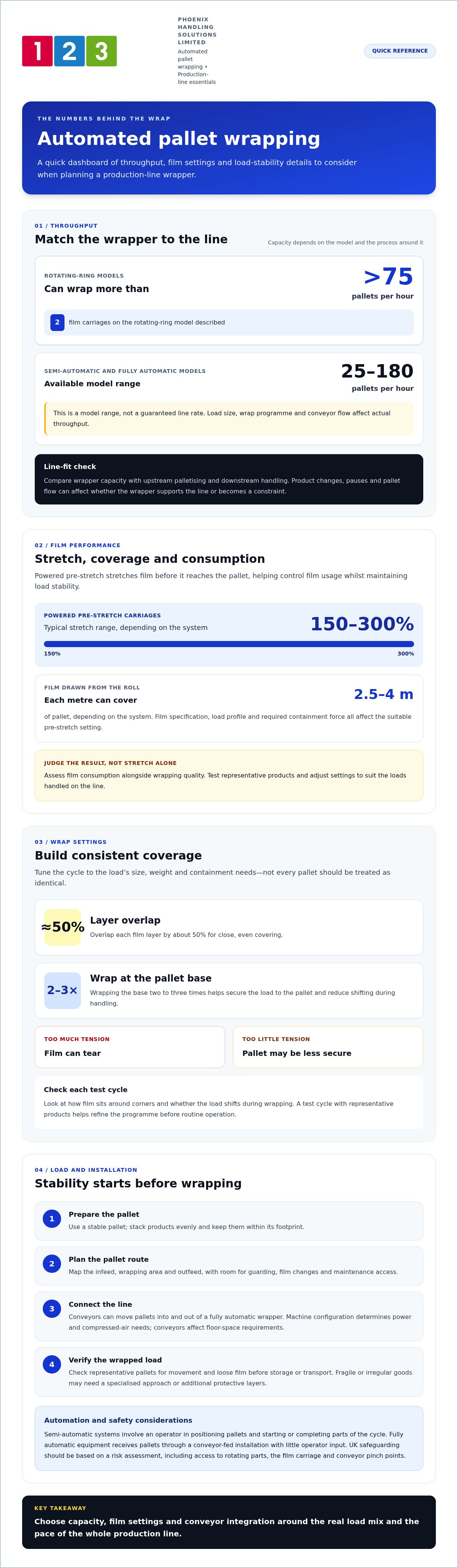
Overlap each film layer by about 50% for a close, even covering, and wrap the pallet base 2-3 times to help secure the load. A test cycle with representative products helps you adjust the programme before routine operation.
Powered pre-stretch and film consumption
A powered pre-stretch carriage stretches film before it reaches the pallet, helping control film usage while maintaining load stability. Depending on the system, powered carriages typically stretch film by 150 to 300 per cent; each metre drawn from the roll can cover two and a half to four metres of pallet.
Compare film consumption alongside wrapping quality rather than judging a setting by stretch alone. Film specification, load profile and required containment force all affect the suitable pre-stretch setting, so assess them together across the products handled on the line.
Safety requirements and wrapping throughput
In the UK, safeguard machinery based on a risk assessment of the wrapper and its installation. Consider access to rotating parts, the film carriage and conveyor pinch points. Guarding, interlocked access and safe stopping arrangements should address identified hazards. Applicable safety standards depend on the machine and its configuration.
Available semi-automatic and fully automatic models span 25 to 180 pallets per hour. Treat this as a model range, not a guaranteed line rate: load size, wrap programme and conveyor flow affect actual throughput. Match the wrapper’s capacity to the pace of upstream palletising and downstream handling.
Automatic in-line pallet wrapping
An in-line wrapper connects pallet packaging with the stages before and after it, so the installation must fit the whole process. A pallet wrapper for production line use should suit your loads, handling pattern and operating pace.
Production-line wrapping system options
Semi-automatic systems require an operator to position pallets and start or complete parts of the cycle. Fully automatic equipment receives pallets through a conveyor-fed installation and wraps them with little operator input. Consider who will change the film, respond to stoppages and manage finished loads. The right level of automation depends on how consistently pallets arrive and how much manual handling you want to retain.
Wrapper selection criteria
Start with the largest pallet footprint and heaviest load in your regular product mix, then consider the range of shapes and weights you handle. A pallet wrapper for production line applications must also suit the required volume and surrounding equipment. Compare its working rate with upstream palletising and downstream transport, allowing for product changes and pauses. This helps show whether the wrapper will support the line or become a constraint.
Installation requirements
Map the pallet route through the infeed, wrapping area and outfeed, allowing space for guarding, film changes and maintenance access. Fully automatic wrapping is commonly integrated with conveyor-fed systems. The machine configuration determines its power and compressed-air needs, while conveyors affect the floor space required. Plan connections and access points as part of the layout, so operators can use the controls without entering moving equipment areas.
Automation risks and supplier support
A mismatch between wrapping capacity and line speed can create queues, while unstable pallets may shift during handling. Assess the load condition and flow of pallets before choosing the automation level. UK packaging-machinery suppliers can provide installation and after-sales support; commissioning, operator training and servicing are practical parts of bringing equipment into use. To compare options for your line, explore stretch-wrapping systems.
Load stabilisation during transport and storage
Secure wrapping helps keep palletised goods together during warehouse storage and transport, reducing exposure to dust, moisture and pallet damage. Load stability starts before wrapping, with a sound pallet and balanced product placement.
Programmable wrap cycles and load reinforcement
Set the wrap cycle to suit the load’s size, weight and containment-force needs. A programmed cycle can apply film consistently around the load, reinforcing areas that need a firmer hold without treating every pallet as identical. Include the pallet base: wrapping it 2-3 times helps secure the load to the pallet and reduces the chance of the goods shifting during handling.
Before wrapping, stack products evenly on a stable pallet and keep them within its footprint. Overhanging cartons or uneven weight distribution can make a load less stable, even when stretch film is applied. Fragile or irregularly shaped goods may need a specialised wrapping approach or additional protective layers. Check representative loads after wrapping for movement and loose film before they enter storage or transport.
Conveyor integration and load-height sensing
Conveyors can move pallets into and out of a fully automatic wrapper, connecting the wrapping point with production and dispatch. Load-height sensors detect the top of each pallet, helping the machine position film accurately and avoid wrapping empty space. Consider how different load heights travel through the line, as consistent sensing supports repeatable film coverage across mixed products.
A turntable rotates the pallet during wrapping, so assess whether the load remains stable as it moves. For less stable or heavy loads, a rotating-arm machine wraps around a stationary pallet instead. After wrapping, check that the film end is tucked or sealed to help prevent the wrap from loosening. These checks support load stability from the wrapping station through warehouse storage and onward transport.
Rotating-ring pallet wrappers
A turntable rotates the pallet beneath a film carriage, making it suitable for stable, uniform loads. A rotating-arm wrapper keeps the pallet stationary while the arm moves around it, suiting heavy or unstable loads. A ring wrapper carries film around the pallet through a rotating ring, supporting high-speed wrapping.
Rotating-ring machines are commonly used in fast-moving consumer goods (FMCG) operations, where pallets need to move through end-of-line packaging efficiently. With two film carriages, a rotating-ring wrapper can wrap more than 75 pallets per hour; with one roll, it can wrap up to 50 pallets per hour. Those figures help frame capacity, but the line’s infeed, outfeed and load mix also shape practical throughput.
Check the maximum load height against the tallest pallet coming from your production area. The rotating-ring wrapper described in this market can handle loads up to 2,400 mm high. Then consider whether the pallet stays stable as it passes through the ring, and whether the conveyor layout can present each load consistently. Confirm the film carriage settings suit the load’s containment needs, rather than assuming higher speed alone will secure it.
For a production line with consistent pallet presentation and a need for high wrapping rates, a ring system may be a good fit. If pallets vary in stability or require a stationary wrapping position, compare rotary-arm and turntable arrangements before deciding. Include film changes, access for routine servicing and integration with existing conveyors in the assessment, as each affects day-to-day operation. To discuss which ring stretch wrapper suits your line, explore the available configurations.
Phoenix Handling Solutions Limited: Rotating turntable stretch wrappers
Phoenix Handling Solutions Limited supplies rotating turntable stretch wrappers for production lines handling stable, uniform pallet loads, alongside rotating-arm and ring wrappers for different load and throughput requirements. The key is to match the wrapping method to pallet movement, load stability and the way goods leave your line.
If you’re planning a new installation or replacing equipment, Phoenix Handling Solutions Limited provides installation, commissioning and operator training. This helps your team understand the machine’s operation and settings as it is brought into use. Turntable systems suit loads that can rotate on a platform; where the pallet needs to remain stationary, a rotating-arm option may be more appropriate.
For a practical discussion about your line and wrapper options, visit stretch-wrappers.co.uk.
Plan your next wrapping step
Before choosing a machine, map the pallet’s route from production through wrapping to dispatch, noting where operators intervene or loads wait. This gives your team a practical basis for discussing integration and defining what the new equipment needs to achieve. Choosing a pallet wrapper for a production line is easier when the discussion starts with real loads, normal operating patterns and the space available around the line.
Phoenix Handling Solutions Limited supplies rotating turntable, rotating-arm and ring stretch wrappers, giving you different wrapping arrangements to compare with your production requirements. The next step is a discussion about how your pallets move and what your operation needs from the wrapping stage.
Contact Phoenix Handling Solutions Limited to discuss your production-line requirements and explore a suitable way forward.
Frequently Asked Questions
At what volume does fully automatic start to make sense?
Automation is worth assessing when wrapping regularly exceeds 10-15 pallets per day, as a pallet wrapper is usually more consistent, safer and more cost-effective than hand wrapping at that volume. Treat this as a guide, not a hard threshold: repeated manual handling, shift patterns and the time spent finishing each pallet also affect the decision. Compare the current wrapping workload with the equipment’s integration needs.
Can one machine handle very different load types?
One machine can handle a varied product mix if its programmes and film settings can be adjusted for each load. For example, a compact, stable carton pallet and a tall, irregular load may need different wrap patterns and containment force. Fragile or unusual shapes can require specialised equipment or extra protective layers, so assess the most challenging loads as well as routine products.
What types of pallet wrappers are suitable for a production line?
Turntable wrappers suit stable, uniform pallets; rotating-arm machines can wrap heavy or less stable loads without rotating the pallet. Ring wrappers are commonly used where fast, continuous output matters, including FMCG operations. Compare how each machine handles your loads, fits the available line layout and connects with pallet movement. This gives you a more useful shortlist than choosing by machine type alone.
How much stretch film does a pallet wrapper use, and what are the ongoing running costs?
Film use depends on pallet dimensions, load shape, wrap pattern, containment needs and film specification. Powered pre-stretch extends film before application, so compare actual consumption across representative loads rather than relying on a single setting. Running costs also reflect machine energy use, servicing and replacement parts. Track film used per pallet and review it alongside load security and maintenance records.
What UK safety standards and guarding requirements apply to pallet wrapping machines?
Base safeguarding on a risk assessment of the wrapper and installation. Guarding, interlocked access and safe stopping arrangements should address identified hazards, including rotating parts, the film carriage and conveyor pinch points. Applicable standards depend on the machine and its configuration.
What maintenance, operator training and servicing does an automatic pallet wrapper require?
Clean machine rollers regularly and inspect parts for wear or damage, replacing them as needed. Plan installation with commissioning, operator training and servicing in mind. Phoenix Handling Solutions Limited provides installation and after-sales support.


