

A pallet wrapper can be delivered and still be a long way from production-ready. Effective pallet wrapping machine commissioning covers installation, film and control setup, safety checks, test wrapping and operator training, with documentation to support handover. The aim is to leave the machine configured for its intended loads and ready for staff to use.
Commissioning involves more than placing a machine on the floor and switching it on. The installation must suit the available space and production flow, while film settings and the wrapping cycle need to match the pallets being handled.
This guide explains the commissioning process, from site preparation and installation to film setup, staff training, documentation and final-wrap inspection. It also covers how to plan a safe, practical handover and arrange installation and ongoing support for your operation.
Key Takeaways
- Set film pre-stretch and wrapping controls to suit the load’s size, weight and containment needs, keeping the film taut without overstretching it at the pallet base.
- Before installation, prepare a level position and a 220-240 V AC single-phase supply operating at 50 Hz.
- Include operator training and clear machine documentation in the handover so staff understand the controls and operating procedures.
- Before use, check the emergency stop and safety provisions, and review information about the machine’s safety installations and relevant ISO/IEC standards.
- Inspect test wraps for loose areas or gaps, then adjust the cycle and check the finished load again before routine operation.
Loading stretch film and setting machine controls
Check that the film specification suits both the wrapper and the pallet load. Most stretch-wrapping machines use polyethylene film, selected for its strength, stretch performance and load retention. Thickness alone does not determine suitability: consider the load’s weight, dimensions, edges and stability, as well as the machine’s pre-stretch capability. A heavy load with sharp corners may need different film performance from a stable, evenly stacked load.
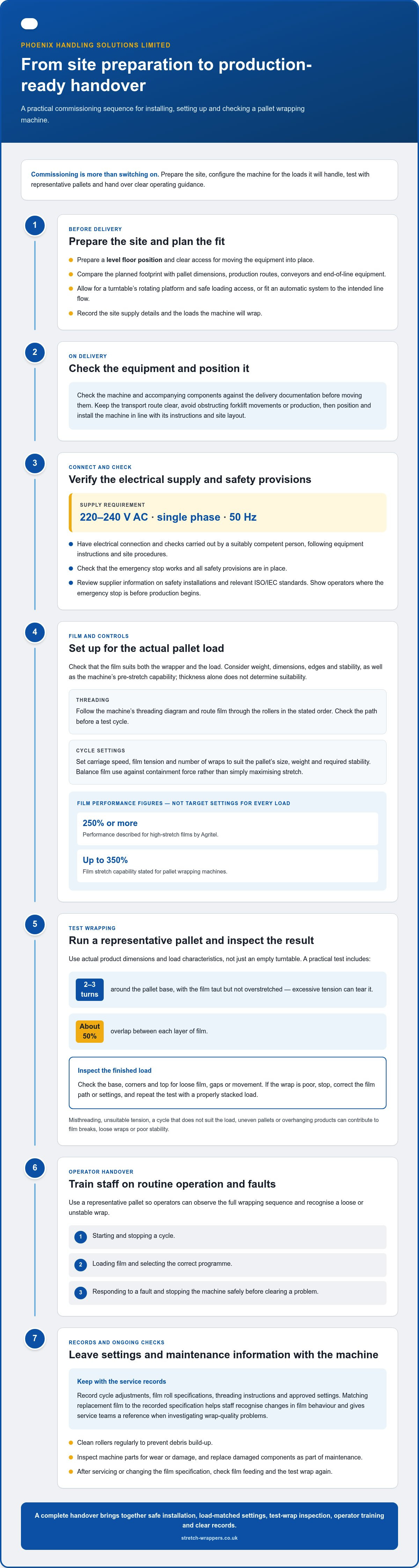
Follow the machine’s threading diagram and route the film through the rollers in the stated order. Incorrect threading can affect film feed, tension and cutting, so check the path before running a test cycle. Set controlled pre-stretch and wrapping parameters to balance film use against containment force. Agritel describes high-stretch films as typically offering 250% or more performance, while pallet wrapping machines can stretch film up to 350%. These figures describe film performance, not a target setting for every load.
Set the cycle for the pallet’s size, weight and required stability. Adjust carriage speed, film tension and the number of wraps as one setup, then assess the finished pallet. At the base, keep the film taut but not overstretched, as excessive tension can tear it. A practical test should include two to three turns around the base, with each layer overlapping the previous layer by about 50%. Inspect corners and the top for loose film, gaps or movement.
- Confirm the roll width, film type and threading route against the machine instructions.
- Choose pre-stretch and tension settings to suit the load, not simply to maximise stretch.
- Run a representative pallet and inspect its base, corners and top before accepting the cycle.
Common commissioning problems include misthreaded film, unsuitable tension and a cycle that does not suit the load. These can cause film breaks, loose wraps or poor stability. Uneven pallets and overhanging products can also shift during wrapping. Stop the cycle, correct the film path or settings, and repeat the test with a properly stacked load.
For UK commissioning, establish the machinery and electrical safety requirements applicable to the installation, then review the supplier’s information on relevant ISO/IEC standards. Check the emergency stop and all safety provisions before operation, and include these checks in the handover.
After commissioning, clean the rollers regularly to prevent debris build-up and inspect machine parts for wear or damage. Replace damaged components as part of maintenance, then check film feeding and the test wrap after servicing or changing the film specification.
When film is supplied under a contract, record its specification so replacement rolls match the machine setup. Keep roll details, threading instructions and approved settings with the service records. This helps staff spot changes in film behaviour and gives service teams a reference when investigating wrap-quality problems.
Machine delivery, installation and staff training
A sound handover moves from site preparation through delivery, installation, safety checks and practical operator training. The sequence should suit the machine type and the manufacturing operations it will serve.
Pre-installation checks
Before arranging transport, prepare a level floor position and clear access for moving the equipment into place. Compare the planned footprint with pallet dimensions, production routes and nearby conveyors or end-of-line equipment. A turntable wrapper needs space for its rotating platform and safe loading access, while an automatic stretch system must fit the intended line flow.
Record the site supply details and the loads the machine will wrap. This information helps align installation planning with the wrapper’s configuration, expected volume and operating conditions.
Delivery and machine installation
On delivery, check the machine and accompanying components against the delivery documentation before moving them to the prepared position. Keep the transport route clear and avoid obstructing forklift movements or existing production operations. Once the machine is positioned, install it in line with its instructions and the site layout.
Commissioning brings the equipment into working order: connect it to the prepared services, load the selected stretch film and run test cycles with representative pallets. Assess performance using actual product dimensions and load characteristics, not just an empty turntable. Record any cycle adjustments before handover to production.
Electrical and safety checks
Before use, check that the planned supply matches the machine requirement: 220-240 V AC, single phase, operating at 50 Hz. Electrical connection and checks should be carried out by a suitably competent person, following the equipment instructions and site procedures. A mismatch between the supply and machine requirements can prevent correct operation.
Confirm that the emergency stop works and all safety provisions are in place. Review the supplier’s information on safety installations and relevant ISO/IEC standards, then show operators where the emergency stop is before production begins.
Staff training and commissioning duration
Training should cover the controls used during routine shifts, including starting and stopping a cycle, loading film, selecting the correct programme and responding to a fault. Use a representative pallet so staff can observe the full wrapping sequence and recognise a loose or unstable wrap. Explain how to stop the machine safely before clearing a problem.
Commissioning time depends on the wrapper type, site readiness, electrical connection, production-line integration and the time needed to test representative loads. Staff numbers and shift patterns also affect how training fits into the handover. A straightforward installation in a prepared position differs from an automatic stretch wrapper integrated into a production line.
For a better understanding of the equipment options and installation process, explore stretch wrapper installation support.
Training and documentation
Training turns the machine settings established during commissioning into repeatable warehouse practice. Pair each instruction with a practical task, such as loading a pallet, selecting its programme and checking the finished wrap. Before working independently, operators should understand how the controls affect film tension, load stability and packaging performance.
Train against real warehouse tasks
Use a representative pallet from the distribution operation rather than relying on a demonstration with an empty machine. Show staff how to position the load, start and stop the cycle, and recognise a loose or damaged wrap. Explain which settings operators may adjust and which changes require an authorised supervisor or engineer.
Include the manual in training and demonstrate its machine-specific instructions at the controls. Staff should know where to find guidance on film loading, programme selection and safe shutdown. A short observed practice task can confirm that each operator can follow the correct sequence without prompting.
Make records useful on shift
Commissioning documentation should be a practical reference for the warehouse team, not just proof that installation took place. Keep the machine manual, operating instructions, safety information and commissioning record together where relevant staff can access them. Record the film material and machine settings used for the approved test load so operators can compare any later changes in wrap quality.
For example, record the load type, selected cycle and any adjustments made during testing. This can help a supervisor investigate whether a change in pallet stability followed a different product, film roll or programme setting. Keep service and inspection records with the machine documentation so maintenance staff can follow its history.
Record safety information and responsibilities
Include the supplier’s information on safety installations and references to ISO/IEC standards in the handover pack. Show operators the emergency stop and explain the site procedure for reporting a fault. Keep the manual accessible so staff can check controls, safe operating instructions or machine-specific warnings during a shift.
Set out responsibilities in writing. Show operators routine checks and how to report damage, while supervisors retain control of programme changes and maintenance records. Clear responsibilities help prevent an informal tension adjustment from becoming an unrecorded change to packaging practice.
Keep training current
Use the commissioning record when training new starters or reviewing a process after a product change. Pallets with different dimensions or irregular shapes may behave differently during wrapping, so staff should know how to spot movement or loose areas. Demonstrate how to stop the machine, report and record a problem before restarting it.
After servicing or a change to the wrapping process, brief affected operators on revised instructions and settings. File the update beside the manual and remove superseded notes from the work area. Clear records help each shift follow the same approved method and give maintenance staff useful details for diagnosing recurring faults.
What pre-installation checks are needed for a pallet wrapping machine?
Start with the machine specification and the pallets it will handle. Record pallet dimensions, load weight, product type, required throughput and film requirements. These details help determine whether the planned position and surrounding production area suit the equipment. For example, a wrapper beside a conveyor needs room for safe pallet transfer and operator access.
Check the floor where the machine will sit. It should be level before setup to give the wrapper a stable base and support consistent operation. Clear stored goods, obstructions and traffic conflicts from the proposed area, then consider how pallets will approach and leave the machine. Include forklift routes and loading space in the layout review.
Confirm the electrical supply before delivery. The required supply is 220-240 V AC, single phase, at 50 Hz. Compare those values with the machine requirements and the site supply, and plan the connection as part of installation preparation. An electrical mismatch can prevent the wrapper from operating correctly, so resolve the connection arrangements before commissioning begins.
Review the production line around the proposed installation. Note any conveyors, palletisers, labelling systems or checkweighers that affect pallet movement. For a wrapper in an automated line, map the handover points and identify where a pallet waits before and after wrapping. This can reveal layout conflicts before the equipment is positioned.
- Measure the available floor area against the machine footprint and pallet route.
- Check that the installation surface is level and clear.
- Match the supply to 220-240 V AC, single phase, at 50 Hz.
- Document pallet dimensions, weight, product type, throughput and film requirements.
- Review nearby conveyors and other production equipment for transfer points.
Load details matter as much as site layout. A light, regular load may behave differently from a heavy pallet or irregular product, affecting the wrapping cycle and stability requirements. Gather examples of the pallets the machine will process, including variations in size or shape, so test wrapping reflects real production rather than an idealised load.
Plan delivery access before the machine arrives. Identify the route from the unloading point to the installation position, including doors, turns and busy warehouse crossings. Keep the route clear and coordinate movement with normal operations. Allow practical access to controls, film-loading points and areas that need inspection during routine servicing.
Bring these checks together in a site-readiness record covering machine requirements, floor position, supply details, pallet information and production-line layout. Assign someone to coordinate access and preparation, then use the record during installation to resolve differences between the planned position and actual warehouse conditions.
What electrical and safety checks are required before a pallet wrapper can be used?
Before a pallet wrapper enters production, check its electrical supply, emergency stop and safety provisions. Compare the installation with the machine instructions, then record the checks and test results. This gives operators a clear handover and helps identify problems before routine wrapping begins.
Match the electrical supply
Confirm the supply is 220-240 V AC, single phase, and operates at 50 Hz. These are the stated requirements for the pallet wrapping machine in the commissioning information. Check the rating information on the machine against the available site supply before connection. If the values don’t match, pause commissioning until the supply arrangements are resolved.
Inspect the connection point and cable route for damage, obstructions or exposure to warehouse traffic. Keep the route clear of pallet movements and forklift paths, and ensure it does not create a trip hazard near the operator position. Record the supply details and connection checks in the installation documentation.
Check emergency stop and safety provisions
Locate the emergency stop switch and test it as directed by the machine instructions. Confirm that the machine stops as intended, then follow the specified reset procedure before resuming a test. Show operators the switch location and reset process during handover, rather than leaving them to learn these steps during a fault.
Inspect the safety provisions required for operation, using the supplier’s information to identify those fitted to the machine. Check that guards and other fitted safety measures are present, secure and unobstructed. The supplier must provide information about the machine’s safety installations with reference to ISO/IEC standards. Keep this information with the operating manual.
Test in the working area
Before wrapping a production pallet, carry out the instructed machine checks with the working area clear. Confirm the controls respond correctly and that the emergency stop is accessible from the operator’s position. Keep people clear of moving parts during the test. Never reach into an operating machine to adjust film or remove an obstruction.
Then observe a controlled cycle with a representative pallet. Check that the wrapper operates as intended and that operators can stop it safely if the load shifts or a fault occurs. Record any issue, corrective action and retest result before releasing the machine for routine use.
Keep the electrical and safety checklist, supplier information and commissioning record together. These documents give shift teams a practical reference and help maintenance staff understand the machine’s installation history. If you’re arranging a new installation, plan stretch wrapper commissioning around the site supply, safety checks and operator handover.
Phoenix Handling Solutions Limited: Rotating turntable stretch wrappers
Phoenix Handling Solutions Limited supplies rotating turntable, rotating arm and ring stretch wrappers, with installation, commissioning and training. If you are planning a new line or replacing existing equipment, the right configuration depends on pallet dimensions, load characteristics, required throughput and available floor space.
Commissioning prepares the machine for operation and helps staff learn its controls and wrapping process. Training can cover film loading, cycle settings, safe operation and assessing a finished wrap, giving operators practical guidance for daily work. The wrapper can also be considered alongside existing conveyors and production equipment so the installation fits how pallets move through your site.
For a practical discussion about wrapper options and installation support, contact Phoenix Handling Solutions Limited.
Turn commissioning into a sound next step
Use pallet wrapping machine commissioning to establish a clear operational baseline for your site. Once the machine is in use, consistent settings and clear responsibilities help staff spot changes in wrap quality and raise maintenance needs before small issues disrupt routine work. Keep the handover practical, with responsibilities understood by the people who operate and maintain the equipment.
Phoenix Handling Solutions Limited supplies rotating turntable, rotating arm and ring stretch wrappers, alongside installation, commissioning and training. The right machine type depends on how pallets move through your operation and the loads you need to wrap. Discuss your working requirements before settling on an approach.
If you’re planning a new installation or reviewing your wrapping setup, contact Phoenix Handling Solutions Limited to discuss your requirements. A straightforward conversation can help you move towards a suitable machine and a well-planned handover, with your team ready for the next stage.
Frequently Asked Questions
Do you provide installation, commissioning and after-sales support?
Yes. Phoenix Handling Solutions Limited provides installation, commissioning and operator training, as well as machine servicing, service contracts and spare parts. This support can help with a new wrapper or equipment already in use. For example, if a product-dimension change affects wrapping performance, servicing can help investigate the machine, while training helps operators use its controls correctly.
What does commissioning a pallet wrapping machine involve?
Pallet wrapping machine commissioning prepares equipment for its intended operation and establishes a practical handover. It includes checking the machine configuration against the application, testing it with representative loads and recording the settings that produce an acceptable wrap. It also clarifies operator tasks and maintenance responsibilities. The result should be a clear reference for the approved setup, not reliance on an individual operator’s memory.
What site requirements apply to pallet wrapper installation in the UK?
Prepare a level installation surface, suitable access for delivery and pallet movement, and a matching electrical supply. The stated supply requirement is 220-240 V AC, single phase, at 50 Hz. Also consider the wrapper’s position relative to forklifts, conveyors and nearby work areas. For example, a layout that leaves the film-loading point difficult to reach can make routine operation awkward, even if the machine fits the floor space.
What steps are involved in installing and commissioning a pallet wrapping machine?
The usual sequence is to prepare the site, position and connect the machine, complete electrical and safety checks, then run test cycles. Use pallets that represent normal production and review the finished wraps before approving the setup. Follow with operator instruction and a documented handover. If the wrapper connects to a conveyor, test the pallet transfer into and out of the machine.
What training, documentation and handover should the supplier provide?
Operators should receive practical instruction on routine controls, film handling, safe stopping and fault reporting. The handover should include the machine manual, operating guidance and the supplier’s information about safety installations, including references to relevant ISO/IEC standards. Keep a commissioning record of approved settings and test observations for supervisors to refer to. Clear records of service work and component changes also help maintenance staff.
What UK regulations and standards apply to pallet wrapping machine commissioning?
Commissioning should establish the machinery and electrical safety requirements applicable to the installation and review supplier information on relevant ISO/IEC standards. Check the emergency stop and all safety provisions before operation.


