

The fastest wrapper on paper may be the wrong choice for your line. High speed stretch wrapping only pays off when a machine can handle your loads and keep pace with production, not simply meet an advertised pallet rate under ideal conditions.
Output matters, especially on a busy line, but load stability, pallet variation, wrapping requirements, conveyor flow and available floor space all affect which system will work in practice. A rotating arm moves around a stationary pallet, while a ring carries the film around a load as it travels through the wrapping zone. Each format has a different fit with the load and production layout.
This comparison explains how the systems differ and how to assess real throughput against your operating conditions. It covers load handling, automation, line integration and space, so you can narrow down the options using more than headline speed. Phoenix Handling Solutions Limited, the UK sales agent for Tosa S.P.A., supplies rotating arm and ring wrappers, with installation, commissioning, training and ongoing support.
Key Takeaways
- High speed stretch wrapping is a line-specific target. Separate a machine’s stated maximum rate from the output you can sustain across a shift.
- Compare rotating arm and ring systems against the same loads and wrapping requirements, then weigh throughput alongside load containment and operator involvement.
- Build a practical shortlist from your pallet range, wrapping specification, current line rate and operating pattern.
- Include changeovers and line interruptions to understand how each system could fit the wider production flow.
- Phoenix Handling Solutions Limited supplies Tosa S.P.A. stretch-wrapping machines and supports installation, commissioning, operator training and maintenance training.
What does high-speed stretch wrapping mean for a production line?
High-speed stretch wrapping means wrapping pallets at the pace your production and dispatch operation needs while maintaining the required load containment. There is no single pallets-per-hour figure that makes a system high speed for every site. The right target depends on the machine, the load and the wider line, including how consistently pallets arrive and move away.
A machine’s stated maximum rate describes its capability under specified operating conditions. Sustained output across a shift is different: it reflects routine production, including interruptions, adjustments and changes between jobs. For a useful comparison, start with your required output and actual operating pattern rather than treating a headline rate as a production forecast.
Wrapping is one stage in a connected process. If upstream equipment supplies pallets intermittently, the wrapper may sit idle. If downstream handling cannot clear wrapped pallets, the wrapping zone may have to stop. Changeovers, operator tasks and stoppages also affect the number of completed pallets. Actual output depends on both the wrapping machine and the performance of the wider line.
Why a headline pallet rate is not the whole story
Published rates relate to particular machine models and operating conditions, so they are not automatically a like-for-like benchmark. Pallet dimensions and load presentation can affect handling, while the wrapping specification, including how film is applied, influences the cycle. General background on stretch wrap and wrapper types can help explain the process, but your own load and wrapping requirements are what make a comparison relevant.
Separate the wrapper’s cycle time from the time a pallet spends in the line. A short wrapping cycle does not guarantee the same rate of finished pallets if loads wait before entering the wrapper, pause during changeovers or queue for downstream handling. Record both cycle performance and delays around the machine to identify where usable throughput is being lost.
When does a line need a high-speed wrapping system?
A faster system may be worth considering when wrapping consistently limits production or dispatch across normal shifts. First, look at pallet flow from upstream processes, the queue at the wrapper and whether completed loads are held up afterwards. This helps establish whether wrapping is the constraint, rather than assuming a faster machine will resolve a line-wide bottleneck.
Build the requirement from operating information: pallets wrapped by shift, variation in arrival rate, changeover frequency and the periods when production stops or slows. Compare that demand with the wrapping specification and the output needed during busier periods. This gives you a practical basis for evaluating machine options and line integration without relying on a universal threshold.
How rotating arm and ring stretch wrappers work at speed
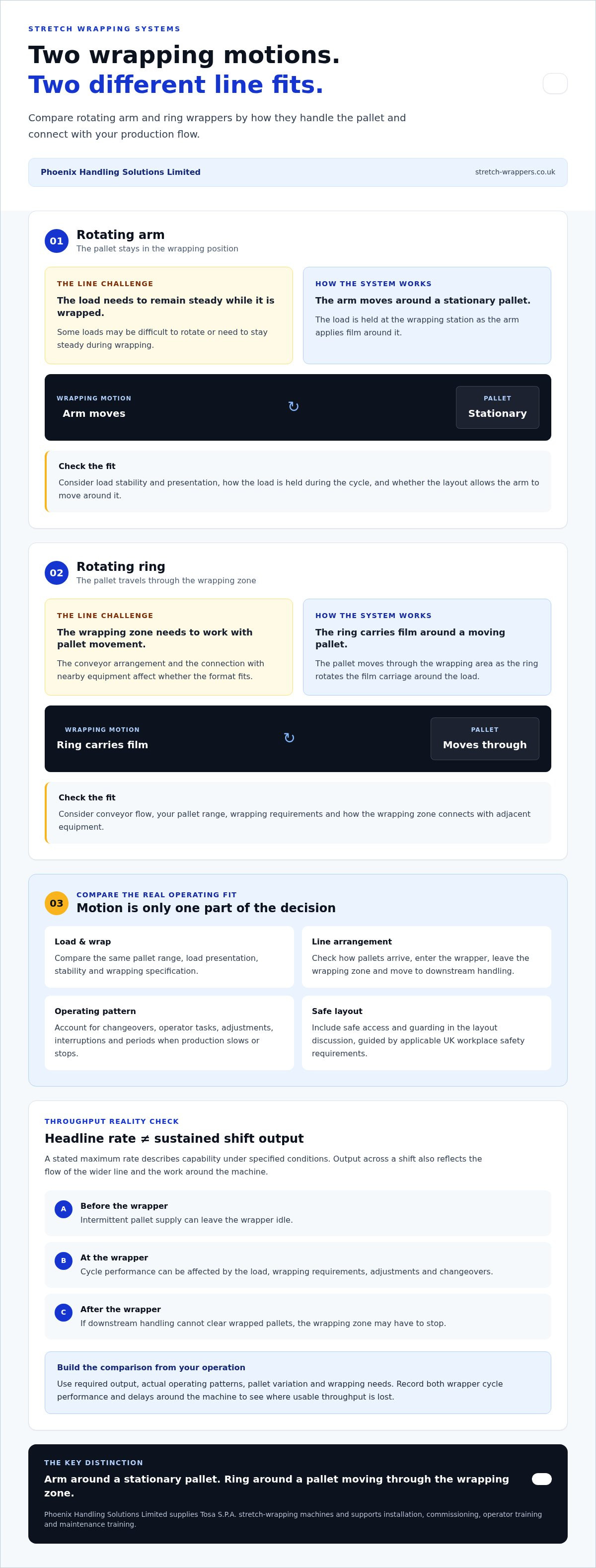
Both systems apply stretch film around a pallet, but they create the wrapping motion differently. A rotating arm circles a load held in position, while a rotating ring carries the film around a pallet as it passes through the wrapping zone. This difference affects load handling and line layout, making it central to comparing options for high speed stretch wrapping.
| Comparison point | Rotating arm | Rotating ring |
|---|---|---|
| Wrapping motion | An arm moves around the stationary pallet. | A ring carries film around the pallet as it travels through the wrapping area. |
| Load movement | The load stays in the wrapping position during the cycle. | The pallet moves through the wrapping zone. |
| Line arrangement | May suit a layout where pallets are brought to, and held at, a wrapping position. | May suit a conveyor arrangement designed to move pallets through the wrapper. |
| Selection considerations | Consider load stability, presentation and how the load is held during wrapping. | Consider conveyor flow, load range and how the wrapping zone connects with adjacent equipment. |
Rotating arm wrapping: the pallet stays in position
With a rotating arm wrapper, the pallet is held at the wrapping station while the arm travels around it, applying film to the load. Keeping the pallet stationary can be useful for loads that are difficult to rotate or need to remain steady during wrapping, although suitability depends on the load and machine configuration. The layout must allow the arm to move around the pallet, and the load must be presented and secured appropriately for the cycle.
Ring wrapping: the film carriage circles the pallet
A ring wrapper uses a rotating ring to carry the film around the load as the pallet moves through the wrapping area. Because the ring’s wrapping movement is separate from the pallet’s forward travel, this format may suit a continuous-flow layout. Its fit still depends on the pallet range, wrapping requirements and conveyor arrangement; ring machines and applications do not all achieve the same rate. Assess the specific model against the intended operating conditions.
In brief, an arm moves around a stationary pallet, while a ring rotates its film carriage around a pallet moving through the wrapping zone. That motion affects the equipment layout and how loads enter and leave the machine. Include safe access and guarding in the layout discussion, guided by applicable UK workplace safety requirements.
Considering load behaviour and conveyor routes together can help narrow the choice before a detailed line review. Phoenix Handling Solutions Limited supplies both rotating arm and ring stretch wrappers. Explore its stretch wrapper options as part of your comparison.
How to compare high-speed stretch wrapping systems fairly
A useful comparison starts with a common test basis, not a headline rate. Assess rotating arm and ring systems using the same pallet dimensions, load pattern, wrapping specification and operating assumptions. Then consider what each result means for production flow. Otherwise, differences in the load or wrap programme may explain the apparent performance gap as much as the machine itself.
Include load containment, product changes, operator tasks and interruptions in your assessment. A wrapper’s capacity is not the same as whole-line performance: the result also depends on pallet supply, transfer and downstream clearance. This is the practical basis for comparing high speed stretch wrapping options.
Compare output, load stability and wrapping requirements
Record current and target pallets per hour across representative production periods, including quieter and busier runs. Describe the loads being wrapped, including their dimensions, weight variation and stability before wrapping. Then define the required containment and wrapping consistency. This gives each system the same job to do, instead of favouring a faster cycle that may not suit the loads or wrapping result you need.
| Criteria | Questions to resolve | Why it matters |
|---|---|---|
| Output | Are current and target rates measured over the same production period? | Helps separate cycle capacity from sustained output. |
| Load range | Are pallet dimensions, weight variation and load pattern alike? | Ensures both systems are assessed against representative loads. |
| Wrapping result | Are the containment requirement and film approach consistent? | Prevents a lighter wrapping task from making one rate look better. |
| Changeovers | How often does the product or wrapping programme change? | Shows how interruptions between runs affect usable production time. |
| Operator involvement | What routine loading, monitoring or intervention is expected? | Reveals the people and process requirements around the machine. |
| Line integration | How do pallets enter, transfer through and leave the wrapping area? | Highlights potential constraints beyond the wrapper itself. |
Compare integration and operational fit
Map the proposed machine against conveyor flow, pallet transfer points, available floor space and neighbouring equipment. Include routine operator tasks and planned stops, as well as the effects of upstream supply or downstream queues. A wrapper may have the required capacity in isolation but deliver less useful output if the surrounding line cannot keep it supplied or clear finished pallets.
For a fair comparison, align the test assumptions: use the same representative loads, wrapping requirements, operating period, changeover treatment and definition of a completed pallet. Establish the conditions behind each capacity figure and distinguish a model’s maximum from output demonstrated under the agreed test. A common basis makes the trade-offs clearer and supports a shortlist grounded in your operation.
How to decide which high-speed wrapper suits your operation
Start with the work your line needs the wrapper to do, then narrow the options by load behaviour, available space and day-to-day operation. This keeps high speed stretch wrapping focused on a real production requirement rather than a machine rate viewed in isolation.
- Gather production data. Record current and required pallet output across representative shifts, including peak periods, quieter runs and recurring stoppages. Note the shift pattern and where queues or delays form, so the wrapping requirement reflects how the line operates.
- Map the load range. Capture pallet dimensions, load patterns, weight variation and load stability before wrapping. Include unusual or changing loads, not only the standard pallet, as these can affect how a system handles the work.
- Set the wrapping requirement. Describe the containment and consistency needed for each load type, along with the wrapping programme or specification. Separate essential outcomes from preferences that could be reviewed later.
- Review the line and footprint. Map pallet movement into and away from the wrapper, surrounding conveyors and handling equipment, and the space available for the machine. Include operator access and the routine tasks required during a normal run.
- Shortlist by fit. Compare rotating arm and ring systems against the same loads, wrapping requirements and line assumptions. Consider whether holding the load in position or moving it through a wrapping zone better suits your operation, then retain the options that meet the essential requirements.
Build a practical specification from real operating data
Bring the information together in a simple specification: representative pallet sizes and load patterns, required wrapping outcomes, current and target output, operating shifts and known constraints. Mark which requirements are essential and which are preferences. A clear record keeps technical discussions focused, makes options easier to compare and reduces the chance of overlooking an unusual load or recurring line issue.
Use a line trial or technical review to test fit
Before settling on a machine type, agree how suitability will be assessed. Use representative loads and consistent operating conditions, then record output, load quality and performance across the run. Include changeovers, operator tasks, transfer points and integration needs rather than judging the machine on a single cycle. Phoenix Handling Solutions Limited can use this operational information to discuss rotating arm and ring options and their fit with your line.
Once you have mapped your requirements, discuss your wrapping requirements with our team to develop a shortlist based on your loads, line flow and operating pattern.
Phoenix Handling Solutions: high-speed machinery with practical support
Choosing between a rotating arm and ring wrapper is one part of planning a high-output system. The equipment also needs to suit the loads, line arrangement and people who will operate and maintain it. Phoenix Handling Solutions is the UK sales agent for Tosa S.P.A. stretch-wrapping machines, including rotating arm and ring systems, and supports projects from equipment selection through installation and ongoing care.
For high speed stretch wrapping, intended line performance needs to be considered alongside commissioning, operator preparation and future machine care. The aim is to base the equipment choice on the application and give your team practical support as the machine moves into day-to-day use.
From machine selection to commissioning
The process starts with your application: pallet and load range, wrapping requirements, expected output, and the space and equipment around the wrapping point. These details help shape a discussion about suitable TOSA machinery, rather than beginning with a speed figure alone. Once the machine has been selected for the project, installation and technical commissioning support its introduction to the line and its operating requirements.
Operator and maintenance training help prepare the people responsible for routine use and care. Understanding the machine’s operating and maintenance requirements gives staff a practical basis for using the equipment and knowing their responsibilities. Training is an important part of bringing the system into the workplace, alongside installation and commissioning.
Plan for ongoing servicing and parts support
Machine care continues after commissioning. Scheduled servicing and service contracts give your operation a structured way to plan maintenance around its needs. Spare parts support is also available for the supplied machinery throughout its operational life.
For a useful planning conversation, bring together the details behind your shortlist and any questions about installation, training or ongoing maintenance. Organise them under:
- Application: load types, pallet dimensions and wrapping requirements.
- Line fit: conveyor arrangement, available space and how pallets move to and from the wrapper.
- Operation: shift patterns, operator tasks and maintenance responsibilities.
- Project support: installation, commissioning, training and servicing needs.
This gives the discussion a practical starting point, whether you are weighing up an arm or ring system or planning support for a new installation. Phoenix Handling Solutions can talk through the application, relevant TOSA machinery and project support. Talk through your stretch-wrapping requirements with our team.
Make your next step a practical one
Turn your production needs into a clear technical discussion: which loads must be wrapped, how the line needs to flow and what your team needs to operate the system confidently. This gives you a firmer basis for evaluating high speed stretch wrapping than a headline rate alone and keeps the focus on a machine that fits the job.
Phoenix Handling Solutions is the UK sales agent for Tosa S.P.A. stretch-wrapping machines, with project support that includes installation, commissioning, operator and maintenance training, servicing and spare parts. Bring your application details and priorities to the conversation to discuss the options in practical terms.
Discuss your high-speed stretch-wrapping requirements with our team and take the next step towards a system that suits your operation.
Frequently Asked Questions
How many pallets per hour counts as high-speed stretch wrapping?
There is no universal cut-off, but high-speed stretch wrapping is often used for systems handling around 50 to 120 or more pallets per hour. Treat that as a broad guide, not a promise of what a particular line will produce. Set a useful target from your own demand: compare required pallets per shift with actual running time, planned breaks, product changes and the time needed to clear wrapped loads.
Are rotating ring wrappers always faster than rotating arm wrappers?
No. Ring wrappers are often selected for high-throughput lines, but the machine type alone does not determine the output you will achieve. Model configuration, load presentation, wrapping requirements and how reliably pallets arrive and leave all affect performance. A ring system may have a high stated capacity but be held back by a downstream queue, while an arm system may better suit a particular load and line arrangement.
Can a high-speed wrapper handle mixed pallet sizes?
That depends on the machine’s working range and how the different loads are presented and wrapped. Compile the smallest and largest pallet dimensions, note variations in height or shape, and identify which products need different wrapping settings. Assess a mixed-size line across representative load types, including routine changeovers as well as the standard pallet.
Does a faster stretch wrapper automatically use less film?
No. Wrapping speed and film consumption are separate measures. Film use depends on the load, containment requirement, application settings and film performance, so a quicker cycle does not by itself mean less film is used. Compare consumption against the same load and wrapping outcome, and consider whether the finished pallet remains adequately contained. Record film use for representative loads alongside output when assessing a proposed system.
What information should I collect before comparing wrapper throughput?
Gather current pallets per hour by production period, shift schedules and time lost to changeovers or stoppages. Include representative pallet dimensions, load patterns, weight variation and the required wrapping outcome. Note how pallets are supplied to the wrapper and cleared afterwards. A line with irregular arrivals should be assessed differently from one that feeds pallets steadily, even if both have the same shift target.
Can a rotating arm or ring wrapper be integrated into an existing conveyor line?
Yes, either type can be considered for an existing line, subject to the layout and operating requirements. Map the conveyor route, transfer points, available floor space and the equipment immediately before and after the wrapping station. Note how pallets are positioned, moved through the area and removed. These details help establish what the installation needs to accommodate and whether the line arrangement suits an arm or ring format.
What support is involved after a high-speed stretch wrapper is installed?
Support can include commissioning, operator and maintenance training, scheduled servicing, service contracts and spare parts. Training helps staff understand routine operation and machine care, while planned servicing provides a structured way to manage maintenance. Phoenix Handling Solutions supplies and supports Tosa S.P.A. stretch-wrapping machines in the UK, with support that can be planned as part of the equipment project and its ongoing operation.


