

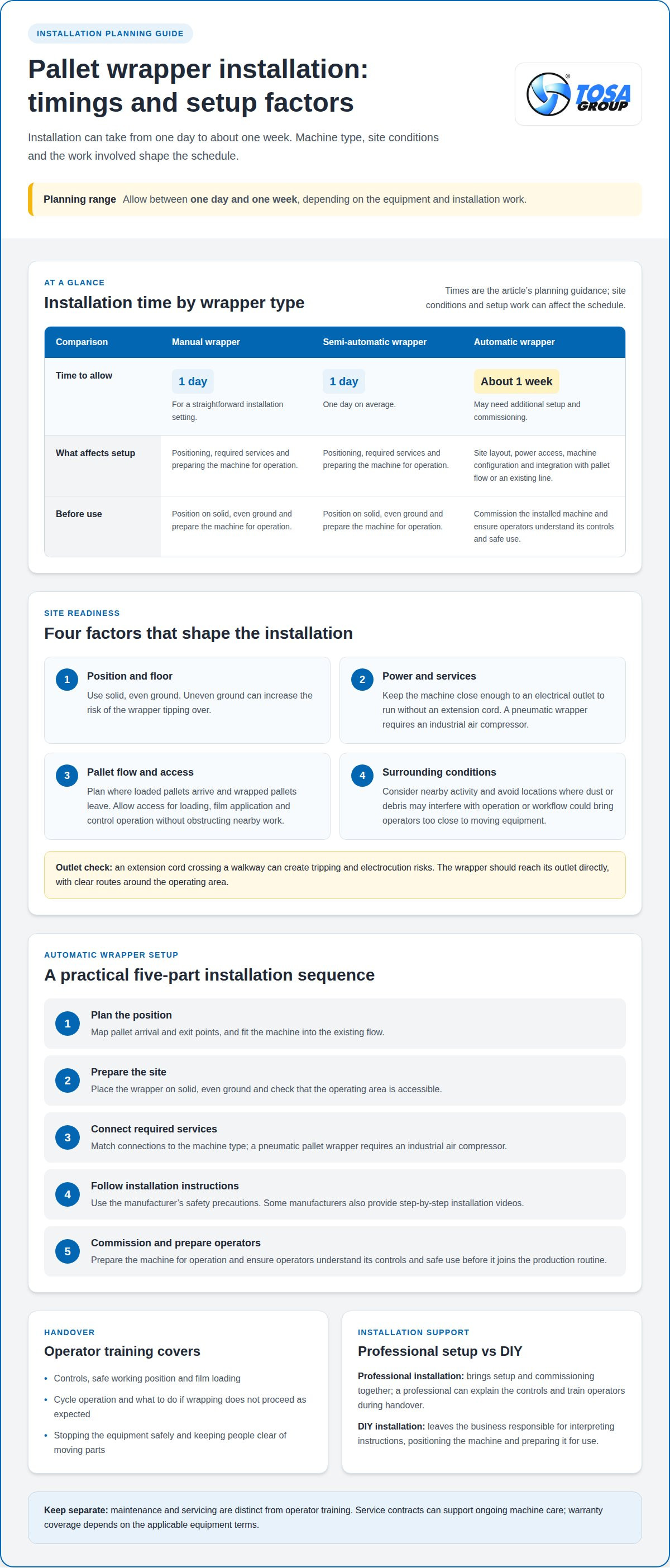
Pallet wrapper installation can take from one day to one week, depending on the machine. A semi-automatic model takes one day on average, while an automatic wrapper takes about one week. This difference matters when planning around production, floor space and where pallets will be wrapped.
It’s reasonable to want a clear picture of what happens before the machine is ready to use. Automatic setup involves more than positioning the wrapper: site conditions, power supply, installation and commissioning all affect the process. This guide explains what can influence the timescale, what to expect during setup, and why the wrapper should be on solid, even ground and close enough to an electrical outlet to operate without an extension cord. Use these points to plan installation around your operation.
Key Takeaways
- Allow for the machine type when planning the installation: semi-automatic setup takes about a day on average, while automatic setup takes about a week.
- Good positioning matters: the wrapper needs solid, even ground and a nearby outlet so it can run without an extension cord.
- Understand how safety precautions, commissioning and operator training fit into preparing a wrapper for use.
- Learn what to consider when reviewing UK machinery safety requirements and how installation support can help bring a new wrapper into operation.
How Long Does It Take To Install A Pallet Wrapper?
Allow one day for a manual wrapper installation in a straightforward setting. Semi-automatic installation takes one day on average, while an automatic machine takes about one week. Overall, installation can range from one day to one week, depending on the equipment and work involved.
Installation involves more than placing the machine on the floor. It includes positioning it on solid, even ground, connecting the required services and preparing it for operation. Automatic equipment may need additional setup and commissioning, so the site layout, power access and machine configuration can all affect the schedule.
Operator training is an important part of handover. Operators need to learn the controls, safe working position, film loading and cycle operation, as well as what to do if wrapping does not proceed as expected. Training should also cover stopping the equipment safely and keeping people clear of moving parts.
Professional installation brings setup and commissioning together. With a DIY installation, the business is responsible for interpreting the instructions, positioning the machine and preparing it for use. A professional can explain the controls and train operators during handover, helping to reduce avoidable setup errors.
Maintenance and servicing are separate from operator training. Servicing and service contracts can support ongoing machine care. Warranty coverage depends on the applicable equipment terms, so installation should not be taken as a promise of a particular warranty or maintenance package.
Common risks include uneven ground, inadequate access to power and placing the wrapper where dust or debris may interfere with operation. Poor workflow planning can also bring operators too close to moving equipment. Repetitive handling and prolonged standing may contribute to fatigue, so training should cover safe operation and the workplace should be arranged to limit unnecessary handling.
Automatic pallet wrapper installation and setup
An automatic pallet wrapper needs a planned installation, not simply a place on the production floor. Setup includes positioning the machine, connecting its required services and preparing it to work with the surrounding pallet flow. The installation instructions include safety precautions intended to help prevent injury, so they should guide the work from the outset.
A wrapper can be installed in an existing warehouse or production line. The layout needs to accommodate the machine and its operating area without obstructing pallet movement, routine access or nearby workstations. For example, a position on an established packing line may suit the workflow if the floor is solid and even and the machine can be approached and operated safely.
A practical setup follows a clear sequence:
- Plan the position: consider how loaded pallets arrive, where wrapped pallets leave, and how the machine fits into the existing flow.
- Prepare the site: place the wrapper on solid, even ground to reduce the risk of it tipping over.
- Connect required services: match the connections to the machine type. A pneumatic pallet wrapper requires an industrial air compressor.
- Follow the installation instructions: use the manufacturer’s safety precautions during setup. Some manufacturers also provide step-by-step installation videos.
- Prepare for operation: commission the installed machine and ensure operators understand its controls and safe use before it joins the production routine.
Automatic equipment may involve more coordination than a standalone manual machine, particularly where it must integrate with an existing line. The position, floor condition, service connections and surrounding workflow all shape the installation work. A range of stretch wrappers can help illustrate how different machine arrangements suit different pallet flows, while the site itself determines the practical fit.
Planning these points together makes installation and setup a joined-up process, rather than a series of unrelated tasks.
Placing the wrapper close to an electrical outlet
A pallet wrapper should be close enough to an electrical outlet to operate without an extension cord. Include the outlet’s position in warehouse planning, alongside pallet access, the wrapping area and the route for finished loads. A convenient location is only suitable if the machine can reach its power supply directly.
Extension cords can create tripping and electrocution risks during installation and operation. For example, a cable stretched across a warehouse walkway may cross the route used by staff moving pallets or handling stretch film. Positioning the wrapper near its outlet avoids relying on this arrangement and helps keep the work area clear.
Consider these practical points when positioning the machine:
- Map the pallet flow: identify where unwrapped pallets arrive and where wrapped loads leave, then position the wrapper near an outlet without blocking either route.
- Keep the cable route clear: the machine should reach the outlet directly, without a lead crossing a walkway or operating area.
- Allow room to work: leave practical access for loading pallets, applying stretch film and operating the controls.
- Consider nearby activity: avoid placing the wrapper where routine warehouse movement could interfere with safe operation.
Outlet location can influence the best position, but it should not be considered in isolation. A machine close to power may still disrupt pallet flow or leave too little room for the operator. Choose a position that balances direct access to the outlet with an orderly wrapping process.
During installation, position the equipment so it can operate without an extension cord and maintain clear access around the wrapping area. If a location requires a cable to cross a busy route, it is a poor fit for everyday workflow. Planning power access and pallet movement together helps avoid that compromise before the wrapper enters service.
Must pallet wrappers meet UK machinery safety standards?
Safety requirements apply when a pallet wrapper is supplied, installed and prepared for use in the UK. The requirements depend on the machine and its intended use, so a general description cannot establish whether a particular installation is compliant.
Safety starts with the machine’s installation instructions. They include precautions intended to help prevent injury and should guide how the equipment is positioned and prepared. For example, the wrapper should stand on solid, even ground to reduce the risk of tipping. Commissioning should follow the manufacturer’s instructions, rather than relying on appearance or a brief test run.
A practical installation review can consider several parts of the setup:
- Machine documentation: use the instructions and safety information supplied for that specific wrapper.
- Site conditions: assess the floor, position and space around the machine before operation begins.
- Safe working arrangements: consider how operators load pallets, apply stretch film and move around the equipment.
- Handover: ensure operators understand the controls and the safety precautions that apply to their machine.
These checks help distinguish a safe working setup from simply having a machine that powers on. An uneven floor or poorly arranged work area, for example, can create practical hazards even when the wrapper is operating. Consider the installation instructions and site conditions together.
For a particular UK installation, the relevant machinery requirements depend on the equipment and how it is used. A product description alone cannot demonstrate that an installed machine meets every applicable requirement. Treat documentation, installation and commissioning as connected parts of the process, and keep the manufacturer’s safety information available to operators.
If you’re planning a new wrapping setup, explore stretch wrapper options alongside the installation requirements, so the machine and its working environment can be considered together.
Phoenix Handling Solutions Limited: Installation, commissioning, and training
Phoenix Handling Solutions Limited provides pallet wrapper installation, commissioning and training, helping businesses move from equipment setup to informed operation. This support is useful when introducing a new machine, integrating a wrapper into an existing workflow or preparing operators to use it safely.
The range includes rotating turntable and rotating arm stretch wrappers. The right arrangement depends on how pallets move through the wrapping area. Installation and commissioning prepare the machine for use, while training gives operators practical guidance on its controls and operation.
If you’re planning a new wrapping setup, contact Phoenix Handling Solutions Limited to discuss installation, commissioning and training.
Plan the next step for your wrapping line
Think beyond the machine’s arrival: how should pallet wrapping fit into the daily movement of goods? A suitable setup starts with the loads you handle, the available floor space and the way pallets move through your operation. Bringing these details together makes discussions about equipment and site preparation more focused.
Phoenix Handling Solutions Limited supplies rotating turntable, rotating arm and ring stretch wrappers, alongside installation, commissioning and training. These options help match the machine arrangement to your wrapping process, rather than treating the equipment as a standalone purchase. The right pallet wrapper installation should support the working layout your operation needs.
If you’re ready to discuss the next step, contact Phoenix Handling Solutions Limited about your requirements. A practical conversation can help you move towards a considered wrapping setup with confidence.
Frequently Asked Questions
Is Training Supplied?
Phoenix Handling Solutions Limited provides operator and maintenance training as part of installation and commissioning. Training is especially useful when a new machine changes the wrapping routine or introduces unfamiliar controls. It helps operators understand the equipment’s intended use and safe operation, while maintenance training gives relevant staff practical guidance on caring for the machinery. This supports a clear handover to the team using it day to day.
What Elements Affect Installation Time?
Machine type is a key factor: semi-automatic installation takes one day on average, while automatic installation takes about one week. The schedule also depends on site readiness, whether the machine needs to fit into an existing production line, and the time required to connect services and complete commissioning. A clear installation area and prepared workflow help avoid delays caused by rearranging the site.
What site requirements are needed before installing a pallet wrapper?
Prepare a solid, even floor and choose a position where pallets can approach and leave without obstructing warehouse activity. The area should have clean, well-ventilated air to help limit interference from dust and debris. Consider operator access to the controls and the space needed to load pallets. In an existing production line, the wrapper should fit the established flow rather than create a bottleneck.
What electrical supply and connections does a pallet wrapper need?
The required electrical supply depends on the machine, so follow its installation instructions when planning the connection. Position the wrapper close enough to an outlet to operate without an extension cord, which can create tripping and electrocution risks. Installation may require additional services, depending on the machine. A site using a pneumatic wrapper, for example, needs to plan for both the electrical connection and compressed-air supply.
What are the steps for installing and commissioning a pallet wrapper?
The process generally moves from site preparation to machine positioning, connection of the required services, commissioning and operator handover. The manufacturer’s installation instructions provide the safety precautions relevant to that equipment. Commissioning prepares the machine for its intended operation, while handover gives operators a chance to understand its controls and safe use. For a production-line installation, the sequence also needs to account for how pallets enter and leave the wrapping area.
How long does pallet wrapper installation take?
Installation can take from one day to one week, depending on the machine. A manual wrapper generally takes one day, semi-automatic installation takes one day on average, and an automatic pallet wrapper takes about one week on average. The overall schedule also depends on site readiness, service connections and how the equipment fits into the existing workflow, making machine type a useful starting point for planning.


